Jimmish Sheth | June 17, 2026
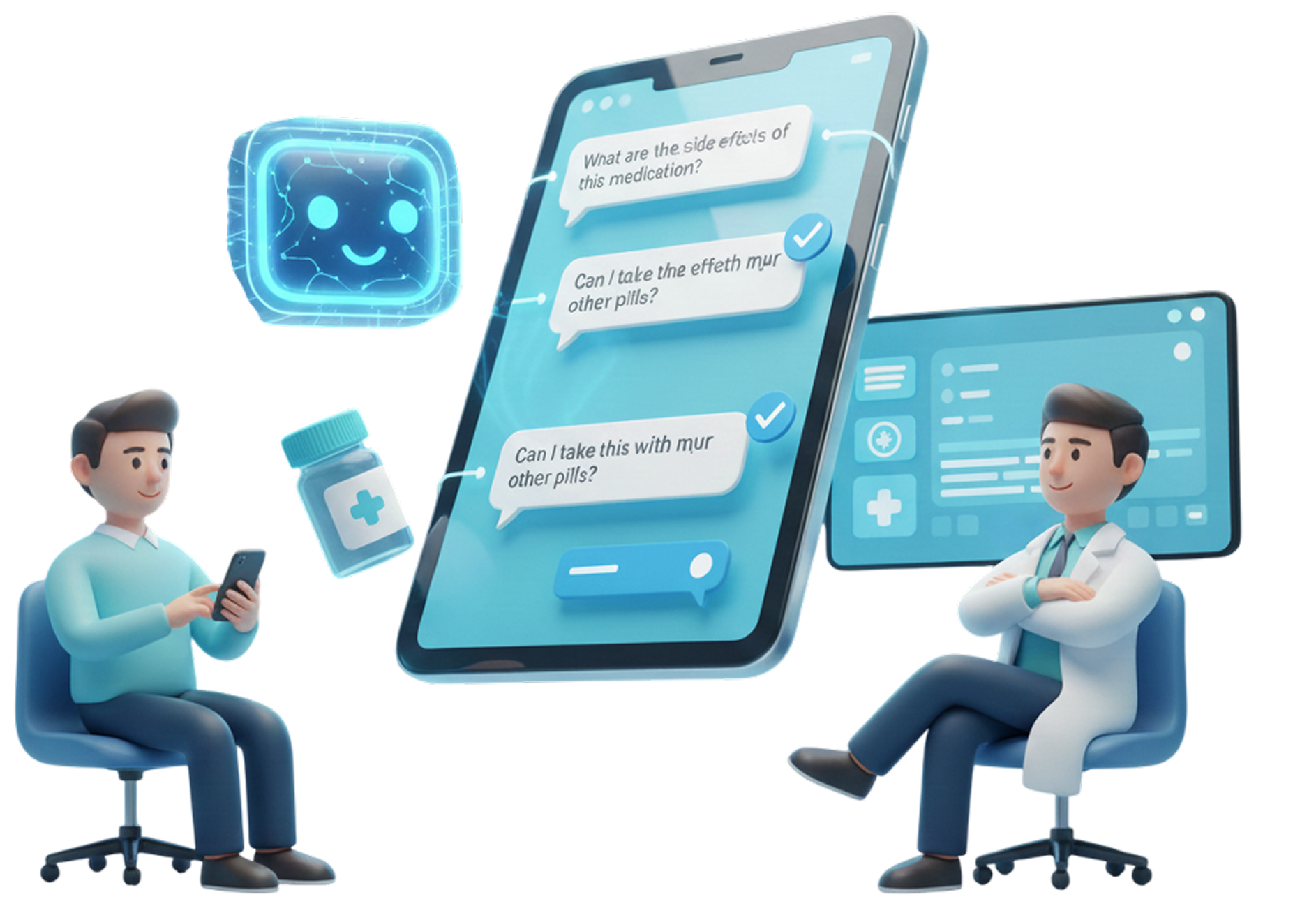
Artificial intelligence is rapidly reshaping healthcare operations across the United States. While AI continues expanding into diagnostics, clinical research, and workflow automation, one of the most practical and immediately valuable applications for healthcare providers is AI-powered patient communication.
Healthcare organizations today face growing operational pressure.
Pharmacies, clinics, medical spas, physical therapy centers, veterinary practices, and healthcare providers are all managing:
At the same time, patients expect healthcare communication to feel faster, more convenient, and more accessible than ever before.
This is where AI medical voice assistants are beginning to play a major role.
AI-powered communication systems help healthcare providers automate repetitive operational tasks while improving communication efficiency and patient experience.
These systems can assist with:
Contrary to common concerns, AI communication systems are not designed to replace healthcare professionals.
Instead, they are designed to reduce operational overload so healthcare teams can spend more time on patient care.
Healthcare providers that adopt AI communication tools strategically are improving efficiency, reducing staff burnout, and creating more scalable patient communication workflows.
AI medical voice assistants use artificial intelligence technologies such as:
These technologies allow communication systems to understand patient requests and respond appropriately.
AI communication systems can support healthcare operations in several ways.
Appointment Management
AI voice systems can schedule, reschedule, or cancel appointments automatically while syncing directly with scheduling systems.
Patient Communication
Patients can receive faster responses to common questions through automated communication workflows.
Workflow Automation
Repetitive operational tasks such as reminders, confirmations, and status updates can be automated.
Communication Accessibility
Voice-based systems improve accessibility for patients who may prefer phone communication over digital forms or mobile apps.
Administrative Support
AI systems reduce repetitive front-desk communication workload and improve operational efficiency.
These tools are becoming increasingly important as healthcare organizations face growing communication demands.
.jpg)
Healthcare communication has become significantly more demanding over the last several years.
Patients expect:
Meanwhile, healthcare staff are often overwhelmed with repetitive administrative tasks.
Without automation, teams spend enormous amounts of time handling:
This operational overload contributes heavily to staff burnout and workflow inefficiency.
AI communication tools help healthcare providers reduce this burden.
Instead of replacing human communication, AI systems manage repetitive operational interactions so healthcare professionals can focus more on meaningful patient care.
One of the biggest benefits of AI communication systems is operational efficiency.
Healthcare providers lose significant productivity every day managing repetitive communication tasks manually.
AI-powered systems help automate these workflows.
Faster Appointment Scheduling
Patients can schedule appointments automatically through voice or digital communication systems.
.jpg)
Reduced Call Volume
AI systems answer repetitive questions and route communication efficiently.
Better Workflow Organization
Centralized communication systems improve operational visibility.
Reduced Administrative Burden
Automation minimizes repetitive front-desk tasks.
Improved Documentation Accuracy
Voice recognition systems help reduce manual data entry and communication errors.
These improvements allow healthcare organizations to operate more efficiently while reducing employee stress.
Patient engagement plays a major role in healthcare outcomes and patient retention.
Patients are more likely to remain loyal to healthcare providers that offer:
AI-powered communication systems improve engagement by making communication more immediate and accessible.
Patients no longer need to wait on hold for simple updates or reminders.
Instead, AI systems can assist with:
This creates a smoother patient experience while reducing communication delays.
.jpg)
Finerr helps healthcare providers modernize communication workflows through connected patient engagement solutions designed specifically for healthcare operations.
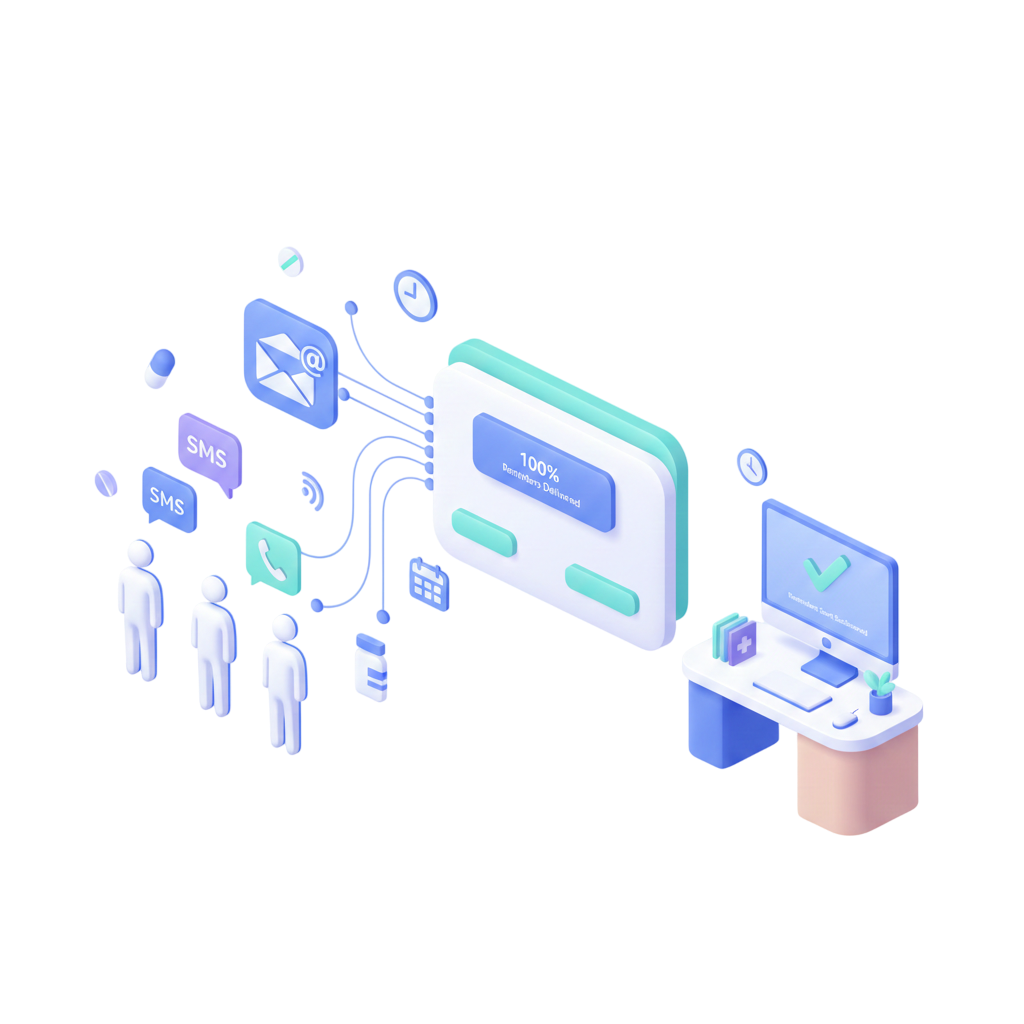
Instead of requiring organizations to manage multiple disconnected systems, Finerr centralizes communication and engagement tools into one operational platform.
Patient Engagement Platform
Finerr provides a connected patient engagement platform that improves communication visibility and operational efficiency.
Cloud Phone System & IVR
Modern cloud phone systems help healthcare providers reduce missed calls and improve communication management.
Related Blog: Optimize Pharmacy IVRAutomated Appointment Reminders
Automated reminders reduce scheduling inefficiencies and improve patient communication consistency.
Related Blog: Automated Patient RemindersTwo-Way Text Messaging
Patients and providers can communicate more efficiently through secure messaging systems.
Related Blog: Text Messaging to Reduce Missed CallsOnline Scheduling Systems
Patients can schedule appointments more conveniently while reducing front-desk workload.
Related Blog: Online Scheduling for PharmacyHIPAA-Compliant Digital Forms
Digital forms reduce paperwork and improve patient intake workflows.
Reviews Management
Healthcare organizations can improve patient trust and online reputation management.
Email Marketing & Patient Campaigns
Automated patient engagement campaigns help improve communication consistency.
Mobile Applications
Patients can manage scheduling, communication, and refill requests digitally.
Healthcare organizations are experiencing growing operational complexity.
Communication Overload
Phone-heavy workflows create operational bottlenecks and staff interruptions.
Related Blog: Fewer Calls, Smoother DaysDisconnected Systems
Multiple software tools create fragmented workflows and communication inefficiencies.
Related Blog: Disconnected SystemsAdministrative Burnout
Employees spend excessive time handling repetitive communication tasks.
Related Blog: Pharmacy Team BurnoutDelayed Patient Responses
High communication volume often slows response times and impacts patient satisfaction.
Workflow Inefficiency
Manual communication systems reduce operational scalability and efficiency.
.jpg)
Finerr helps healthcare providers simplify operations by centralizing communication and workflow systems.
Centralized Communication
Calls, reminders, messaging, scheduling, and patient communication operate within one platform.
Workflow Automation
Automation reduces repetitive administrative work and communication delays.
Improved Patient Experience
Patients receive faster, clearer, and more consistent communication.
Better Operational Visibility
Healthcare teams gain improved oversight across patient communication workflows.
Reduced Staff Burnout
Simplified systems reduce interruptions and operational stress.
Scalable Healthcare Operations
Connected systems help healthcare organizations grow more efficiently.
.jpg)
While AI communication tools provide significant advantages, healthcare organizations must implement them thoughtfully.
HIPAA Compliance
Healthcare communication systems must securely protect patient information.
Integration Compatibility
Organizations should choose systems that integrate smoothly with existing healthcare workflows.
Communication Accuracy
Voice recognition systems continue improving, but healthcare providers should monitor communication quality carefully.
Human Oversight
AI systems should support healthcare teams — not replace human judgment or patient relationships.
The best healthcare communication systems combine automation with human-centered care.
AI communication technology will continue evolving rapidly over the next decade.
Future AI systems may support:
Healthcare providers that adopt connected communication systems early will be better positioned to adapt to future operational demands.
The future of healthcare communication will likely combine:
Organizations that balance these elements successfully will create stronger patient experiences and more scalable healthcare operations.
See how healthcare providers are improving communication and operational efficiency using Finerr:
Case study: Zarchy Pharmacy Case study: Carteret PharmacyAI medical voice assistants are becoming one of the most practical ways healthcare providers can improve communication efficiency without increasing operational complexity.
Modern healthcare organizations are under pressure to deliver faster communication, better patient experiences, and more scalable operations.
AI-powered communication systems help reduce administrative overload while improving patient accessibility and workflow efficiency.
Finerr supports this modernization through connected patient engagement tools that centralize communication, scheduling, reminders, messaging, and workflow automation into one streamlined healthcare platform.
Healthcare organizations that embrace thoughtful automation today will be better prepared for the future of patient communication tomorrow.


AI medical voice assistants are transforming healthcare communication by helping providers automate repetitive administrative tasks, improve patient engagement, and streamline operational workflows. From appointment scheduling and patient reminders to two-way communication and workflow automation, AI-powered systems allow healthcare teams to focus more on patient care instead of manual processes. Modern healthcare organizations are increasingly adopting AI communication tools to reduce burnout, improve operational efficiency, and provide faster patient support. Finerr helps healthcare providers modernize communication workflows through connected patient engagement solutions, including cloud phone systems, automated reminders, texting solutions, scheduling systems, and communication tools designed to improve both operational efficiency and patient experience.
Get in Touch




AI medical voice assistants are communication systems that use artificial intelligence to automate healthcare-related interactions. They help with appointment scheduling, reminders, patient communication, and workflow automation. These systems improve operational efficiency while supporting better patient experiences.
AI voice assistants reduce administrative workload by automating repetitive communication tasks. They help healthcare teams manage scheduling, reminders, and patient inquiries more efficiently. This allows providers to focus more time on patient care.
No, AI communication systems are designed to support healthcare professionals rather than replace them. Automation handles repetitive operational tasks while healthcare providers continue managing patient care and clinical decision-making.
AI systems provide faster responses, automated reminders, refill updates, and easier scheduling support. Patients receive more consistent communication without long wait times. This improves overall patient satisfaction and accessibility.
Healthcare organizations are adopting AI tools to improve workflow efficiency, reduce burnout, and manage growing communication demands. AI systems help automate repetitive tasks while improving operational scalability.
Automation handles predictable communication tasks such as reminders, scheduling confirmations, and status updates. This reduces manual administrative workload and improves communication consistency.
AI systems allow patients to schedule, reschedule, or cancel appointments automatically. This reduces scheduling interruptions for staff while improving convenience for patients.
Healthcare communication systems must follow HIPAA compliance requirements to protect patient information. Providers should choose secure communication platforms designed specifically for healthcare environments.
Finerr centralizes communication, scheduling, reminders, messaging, and engagement tools into one connected healthcare platform. This improves workflow visibility and operational efficiency.
Patient engagement improves communication, trust, satisfaction, and long-term patient retention. Engaged patients are more likely to follow treatment plans and maintain consistent healthcare relationships.
Cloud phone systems reduce missed calls and improve communication organization. They centralize patient communication and help healthcare teams manage call volume more efficiently.
AI automation reduces repetitive administrative work and communication overload. Employees spend less time handling routine tasks and more time supporting patient care.
Two-way texting improves communication convenience and reduces phone interruptions. Patients receive faster responses while healthcare teams manage communication more efficiently.
Digital forms reduce paperwork, improve data accuracy, and speed up intake workflows. Patients can complete forms online before appointments, improving operational efficiency.
Connected systems reduce workflow fragmentation and improve operational visibility. Centralized communication helps teams manage patient interactions more efficiently.
Healthcare providers can improve patient experience through faster communication, simplified scheduling, automated reminders, and consistent engagement workflows.
Challenges may include system integration, communication accuracy, HIPAA compliance, and implementation planning. Healthcare providers should choose reliable platforms designed specifically for healthcare workflows.
Operational efficiency helps organizations reduce delays, improve productivity, and create better patient experiences. Efficient workflows also reduce administrative burden across healthcare teams.
AI will continue improving healthcare communication, automation, workflow efficiency, and patient engagement. Future systems will likely provide more advanced communication and operational intelligence.
Healthcare providers are investing in AI communication systems to improve scalability, reduce burnout, improve patient engagement, and streamline operational workflows. Modern communication systems help organizations deliver faster and more consistent patient experiences.
See how Finerr helps healthcare providers centralize voice, messaging, scheduling, and reminders—so your team spends less time on repetitive calls and more time on patient care.