Jayesh Sarawagi | Feb 13, 2026 | 2 min read
Patient health doesn't just depend on prescriptions or treatments — it depends on adherence and follow-through.
Yet many patients forget to attend appointments, skip refills, or delay preventive care. These gaps lead to worse health outcomes, higher costs, and lower patient satisfaction.
The solution? Automated patient reminders.
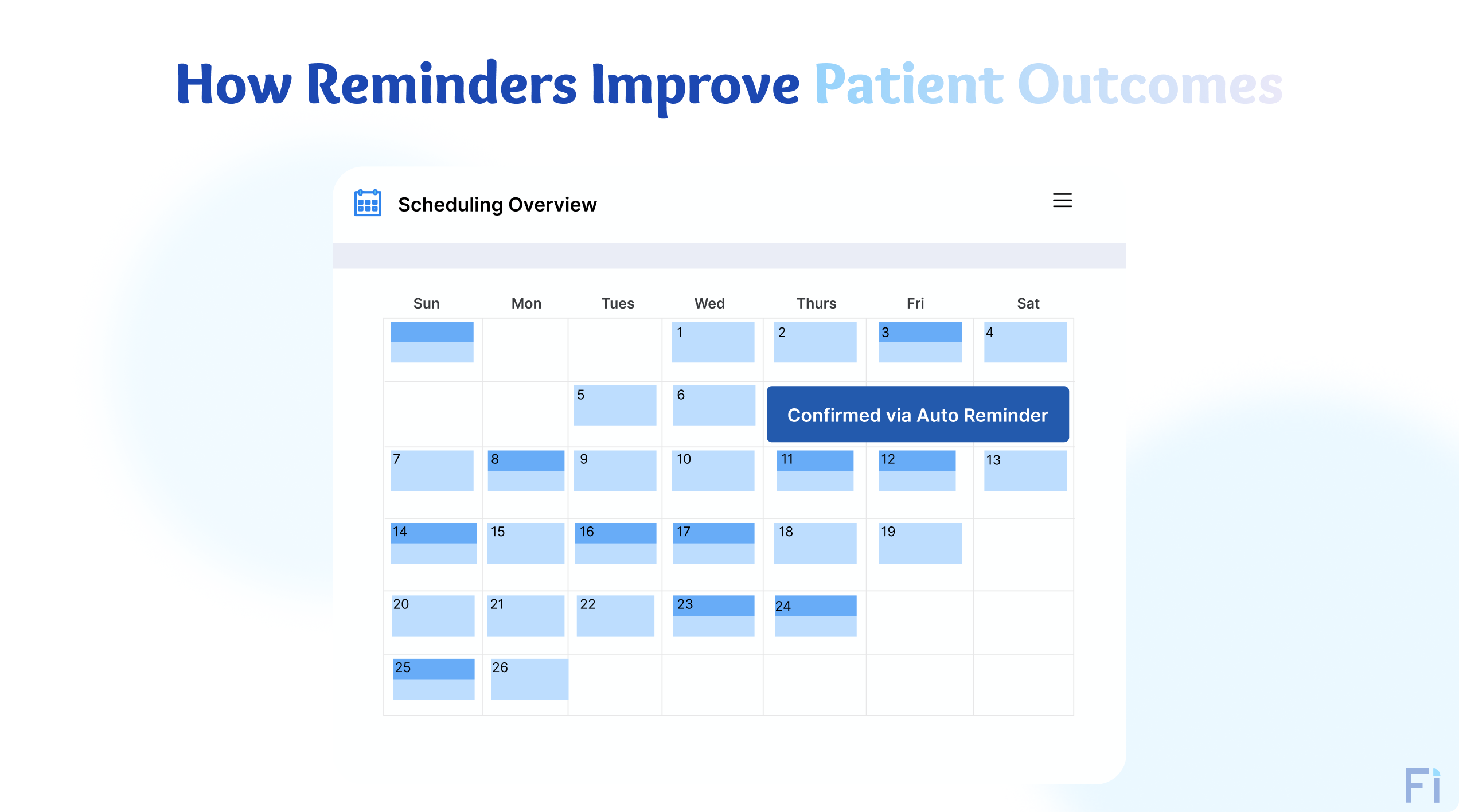
With platforms like Finerr's Automated Patient Reminder system, pharmacies and clinics can keep patients on track — improving not just attendance, but overall health outcomes.
A consistent reminder system removes these barriers.
Read more: Pharmacy Team Burnout: How Finerr Simplifies Daily Chaos
When patients receive timely reminders, they're far more likely to show up.
Impact: More consistent care = better long-term outcomes.
Refill reminders ensure patients don't skip doses.
Impact: Reduced complications and hospital readmissions.
Read more: How Patient Experience Drives Revenue in Medical SpasMany patients forget about vaccines, screenings, or wellness visits.
Impact: Stronger prevention, fewer health crises.
Patients who feel supported are more proactive about their health.
Impact: Higher satisfaction, loyalty, and retention.
By improving adherence and preventive care, reminders help patients avoid serious health issues that lead to ER visits.
Impact: Better outcomes for patients, reduced strain on healthcare systems.
A pharmacy chain implemented Finerr's Automated Patient Reminders for vaccinations and refills. In 6 months:
It's more than reminders — it's care continuity made simple.
Health outcomes depend on consistency. Automated patient reminders ensure patients don't fall through the cracks — whether it's a flu shot, refill, or follow-up visit.
With Finerr's Automated Patient Reminder system, pharmacies and clinics can improve adherence, support preventive care, and strengthen patient engagement — leading to healthier patients and stronger communities.
Ready to improve patient outcomes with automated reminders? Request a demo with Finerr today.


Automated patient reminders play a critical role in improving health outcomes by boosting appointment attendance, medication adherence, and preventive care participation. By delivering timely, personalized alerts through SMS, email, or voice, reminders help patients stay consistent with their care plans. Platforms like Finerr enable pharmacies and clinics to close communication gaps, reduce emergency visits, and build stronger, more engaged patient relationships—leading to healthier patients and better long-term outcomes.
Get in Touch

Automated patient reminders are scheduled messages sent via SMS, email, or voice to remind patients about appointments, refills, or preventive care. They run automatically without staff intervention. This helps practices reduce missed visits and improve communication.
Reminders ensure patients don't forget their appointments by notifying them ahead of time. Multiple touchpoints increase recall and accountability. Many practices see no-show rates drop by 20–30%.
Yes, they're especially valuable for independent practices and pharmacies. Small teams save time and reduce administrative workload. Automation helps maintain efficiency without hiring additional staff.
Absolutely. SMS reminders are the most popular option because they're quick and easy to read. Patients are far more likely to see a text than answer a phone call.
Yes. Voice call reminders are ideal for patients who prefer phone communication. Offering multiple channels ensures no patient is left out.
Yes. Patients can select SMS, email, or voice calls based on their preference. This flexibility improves satisfaction and response rates.
When implemented correctly, yes. Platforms like Finerr use secure, HIPAA-compliant systems to protect patient data. All communications follow privacy regulations.
Yes. Messages can be personalized with patient names, appointment times, and service details. Personalization makes reminders feel professional and caring, not robotic.
Yes. Practices and pharmacies can send refill reminders automatically. This improves medication adherence and reduces last-minute refill requests.
They can. Recurring visits like therapy sessions, chronic care checkups, or monthly refills can be scheduled once and sent automatically. This eliminates repetitive manual work.
Reminders can be scheduled days or hours before an appointment. Many practices use a combination, such as one reminder 48 hours before and another on the same day.
Yes. Automated reminders can include rescheduling options or links. This allows patients to act instantly instead of calling the office.
Not always, but they significantly reduce the need for manual calls. Staff can focus on patient care while automation handles routine reminders. Calls are reserved for special cases.
No. They are cost-effective compared to lost revenue from missed appointments. Most practices see a positive return on investment within a short time.
Yes. Patients appreciate clear, timely communication. Reminders show that the practice values their time and care experience.
Absolutely. Reminders work well for flu shots, annual checkups, screenings, and vaccinations. This helps practices increase preventive care participation.
Yes. By removing repetitive tasks, staff can focus on in-clinic responsibilities. Many practices save several hours per week after implementing reminders.
Yes. Message content, timing, and delivery channels can be fully customized. Practices can align reminders with their brand voice and workflow.
Yes. Advanced systems integrate with appointment scheduling and digital forms. This ensures reminders are accurate and always up to date.
Patient expectations are digital-first, and no-shows are costly. Automated reminders improve efficiency, revenue, and patient relationships. They're no longer optional — they're essential.
Finerr's Automated Patient Reminder system helps practices reduce no-shows, improve efficiency, and keep patients engaged — without adding work for staff. See how it works for your practice.