Finerr Team | January 15, 2025
The healthcare industry is evolving faster than ever. Rising patient expectations, staff shortages, stricter compliance rules, and increasing competition from large corporate providers are putting enormous pressure on independent practices.
To stay competitive, practices must do more with less. The solution? Automation.
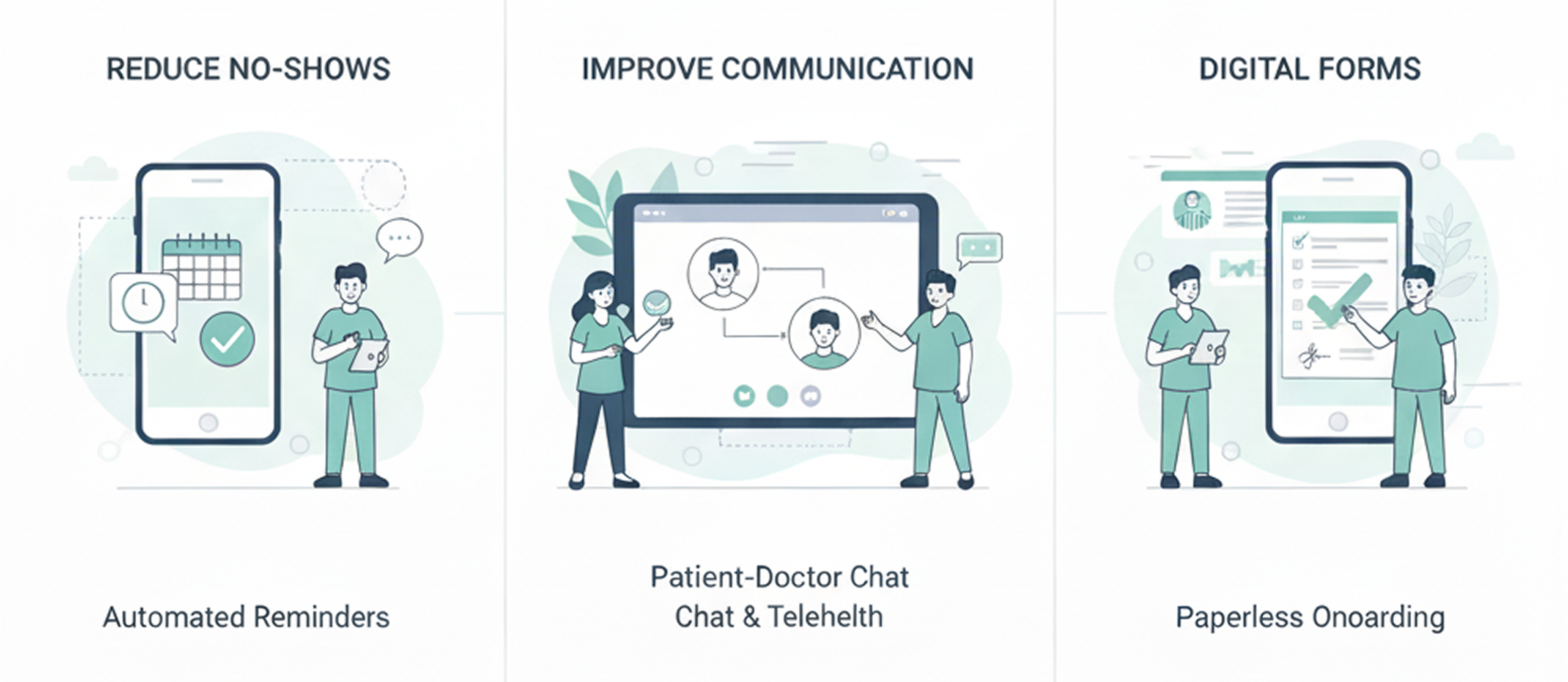
From automated reminders that reduce no-shows to digital forms that eliminate paperwork, automation is no longer a luxury � it's a necessity for growth in 2025. Platforms like Finerr are leading the way, helping independent pharmacies, dental clinics, physical therapy centers, and veterinary practices thrive in a digital-first world.
Automation isn't about replacing human care � it's about removing the repetitive tasks that drain staff time and limit patient engagement.
Consider this:
Automation directly addresses these pain points by creating efficiency, accuracy, and consistency.
No-shows impact revenue and patient health outcomes. Automated reminders ensure patients:
Finerr clients have reported up to 30% fewer cancellations after implementing automated reminders.
Patients expect quick, convenient communication. Automation makes it possible to:
Instead of manually calling dozens of patients, staff can rely on Finerr to handle bulk communication instantly.
Manual billing is time-consuming and prone to delays. With Finerr's online payment system , practices can:
This means better cash flow and less stress for both staff and patients.
Patients no longer want to wait on hold. Automated scheduling tools let them:
For staff, this means fewer phone calls and a more efficient calendar .
Online reputation is everything in 2025. Finerr automates review requests, ensuring happy patients share their experience online while negative feedback is routed privately for resolution.
Clinics using Finerr's review management tools often see a 40�60% increase in positive reviews within months .
Paper forms waste staff time and frustrate patients. Automation allows:
This speeds up check-in and reduces errors.
Practices that embrace automation in 2025 will:
Automation doesn't just improve efficiency � it creates a better patient experience , which leads to loyalty and growth.
Automation is not the future � it's the present. In 2025, practices that embrace automation will thrive, while those that don't risk falling behind.
Finerr gives independent practices the tools to automate communication, reminders, billing, and reviews � creating efficiency, improving patient engagement, and driving sustainable growth.
Pro tip: Start with one area � like automated reminders or online scheduling � and expand into reviews, payments, and digital forms as your practice grows.
Ready to see how automation can transform your practice? Schedule a demo with Finerr today.
Read more about Finerr:


Not with Finerr. Our platform is built to be affordable for independent practices, offering modular tools that scale as you grow.
No. Automation handles repetitive tasks, freeing staff to focus on personalized patient care.
Yes. Finerr ensures all automated reminders, digital forms, and payments are fully HIPAA-compliant.
Many practices see measurable improvements in no-show reduction and revenue growth within the first 60�90 days.
Automation in healthcare refers to using digital tools and intelligent systems to reduce manual tasks. By 2025, automation focuses on improving efficiency, accuracy, and patient communication across healthcare organizations.
Rising patient demand, staffing shortages, and operational complexity make manual processes unsustainable. Automation helps healthcare providers deliver faster, more consistent care with fewer resources.
Automation enables instant responses, reminders, and updates through digital channels. This improves clarity, reduces missed messages, and strengthens patient trust.
Patient engagement will shift from reactive to proactive. Automated tools will help providers stay connected with patients before, during, and after care episodes.
Automation eliminates repetitive administrative tasks like appointment confirmations and follow-ups. This allows healthcare teams to focus more on patient care.
Yes, automation reduces constant interruptions and manual workload. By handling routine tasks, staff experience less stress and better work-life balance.
Scheduling systems will become smarter with real-time availability and automated reminders. A Scheduling Platform will reduce no-shows and improve resource utilization.
Phone automation will manage high call volumes through intelligent routing. IVR-based systems will ensure patients get information without long wait times.
Automated systems reduce human error in data entry, scheduling, and communication. This leads to more reliable workflows and safer patient interactions.
No, automation supports staff rather than replacing them. It handles repetitive tasks so professionals can focus on high-value patient care.
Faster responses, timely reminders, and clear communication create a smoother patient experience. Automation ensures consistency across touchpoints.
Yes, automated systems scale easily to handle more interactions without increasing staff workload. This is critical as patient volumes continue to rise.
Automation will use real-time data to optimize scheduling, communication, and resource allocation. This enables smarter and faster decision-making.
Challenges include change management, system integration, and staff training. Successful adoption requires thoughtful implementation and ongoing optimization.
Pharmacies can automate refills, reminders, and call handling. This improves efficiency while maintaining high levels of patient communication.
Automation ensures consistent messaging across phone, text, email, and online platforms. Patients receive timely information through their preferred channels.
Yes, automated workflows ensure consistent documentation and timely communication. This supports regulatory compliance and audit readiness.
Automated confirmations and reminders reduce forgotten appointments. This leads to better attendance and predictable workflows.
Key technologies include AI-driven workflows, cloud-based systems, and integrated communication platforms. These tools enable scalable automation.
Organizations should evaluate workflows, adopt flexible digital tools, and train teams early. A strategic approach ensures long-term success with automation.