Jayesh Sarawagi | November 9, 2026
Healthcare professionals enter their field to help people, improve health outcomes, and build meaningful relationships with patients. Yet, a significant part of their working day can be consumed by administrative responsibilities—answering phone calls, coordinating appointments, sending reminders, managing paperwork, responding to messages, and following up with patients.
These tasks are essential, but managing them through disconnected tools and repetitive manual processes can make an already demanding workday more complicated than it needs to be.
For independent pharmacies, dental offices, medical spas, physical therapy clinics, veterinary practices, and other healthcare providers, operational efficiency is about more than completing tasks faster. It is about creating an environment where teams can work confidently, communicate consistently, and deliver a better patient experience without unnecessary interruptions.
That is where better systems make a difference.
Finerr is a patient engagement platform designed to help independent healthcare providers simplify routine workflows, strengthen patient communication, and support business growth. By bringing essential communication, scheduling, engagement, and digital services together, Finerr helps healthcare teams spend less time navigating operational challenges and more time focusing on their patients.
Because better systems should do more than improve processes. They should create better days for the people who provide care.
Healthcare operations have become increasingly demanding. Patients expect convenient appointment booking, timely updates, responsive communication, and easy access to services. At the same time, healthcare teams must manage daily responsibilities while maintaining accuracy, professionalism, and personal attention.
Without the right processes in place, even small operational issues can create a chain reaction.

1. Repetitive Administrative Work Takes Time Away from Patients
Front-desk employees and healthcare professionals often handle recurring tasks such as appointment confirmations, follow-up calls, patient inquiries, and information collection. When these activities rely entirely on manual effort, they consume time that could otherwise be spent assisting patients.
The problem is not that these tasks are unnecessary. It is that many routine activities can be organized or automated more efficiently.
2. Missed Calls and Delayed Responses Create Friction
Patients may call to schedule appointments, ask questions, request prescription refills, or clarify service details. When staff are assisting someone in person or managing another priority, calls can go unanswered.
Repeated missed calls and delayed responses can frustrate patients and create additional work when staff must return calls later. A structured phone and messaging workflow can help teams manage communication more consistently.
3. Disconnected Tools Complicate Daily Operations
Some practices use separate systems for phone calls, appointment scheduling, patient reminders, forms, reviews, and marketing. Each tool may serve a purpose, but moving between multiple platforms can introduce unnecessary steps and make routine work harder to coordinate.
Disconnected workflows can also make it difficult to maintain consistent communication across the patient journey.
4. Inconsistent Follow-Ups Can Weaken Patient Engagement
Patients may forget appointments, overlook messages, or delay scheduling recommended follow-up visits. If a team must manually track every reminder and follow-up, maintaining consistency becomes challenging—particularly during busy periods.
A repeatable communication process helps practices stay connected with patients without relying solely on staff memory.
5. Constant Interruptions Can Increase Team Pressure
A busy healthcare team may be interrupted by phone calls, last-minute scheduling questions, paperwork, and requests for information throughout the day. Each interruption may appear minor, but together they can disrupt concentration and make it harder to complete important tasks.
Better systems help create predictable workflows, clearer responsibilities, and fewer avoidable interruptions.
Read more: 5 Ways Cloud Phone Systems Improve Efficiency in Pharmacies & Clinics Read more: How Pharmacies Improve Efficiency With Patient Engagement Platforms Read more: The Hidden Cost of Operational Chaos in Healthcare Read more: Why Operational Efficiency Is a Competitive Advantage in US HealthcareFinerr brings together patient engagement tools and digital services that help healthcare organizations improve communication, organize routine tasks, and strengthen their online presence. Practices can explore the services that best fit their operational needs and existing systems.
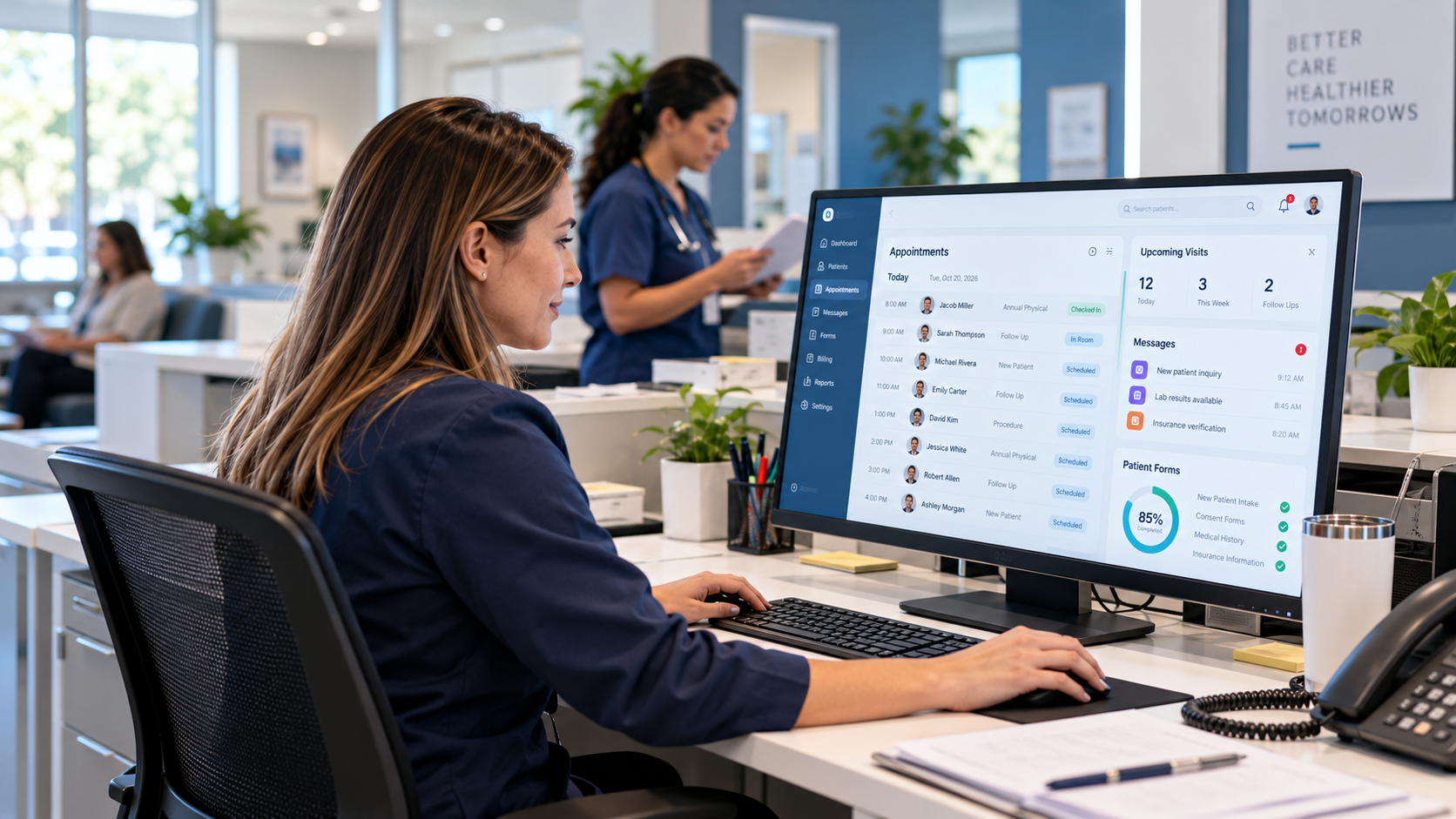
Patient Engagement Platform
Finerr's patient engagement platform helps healthcare providers organize communication and improve how they interact with patients. It supports a more consistent approach to appointments, reminders, messages, and ongoing engagement.
Cloud Phone System and IVR
A cloud phone system with an interactive voice response (IVR) system helps practices organize incoming calls and direct patients toward the appropriate information or team. Call routing, voicemail, and phone-based workflows can help staff manage communication more effectively.
Online Scheduling
Online scheduling gives patients a convenient way to request or book appointments without always needing to call the office. It can help reduce back-and-forth communication and make appointment access easier.
Automated Patient Reminders
Automated appointment reminders help practices send timely notifications through supported communication channels. Reminders can reduce the need for repetitive manual outreach and help patients stay informed about upcoming appointments.
Two-Way Patient Text Messaging
Two-way texting provides a convenient channel for patient questions, appointment confirmations, and routine communication. It can help practices respond more efficiently while giving patients an alternative to calling for every interaction.
Digital Forms and Intake
Digital forms allow practices to collect relevant information electronically instead of relying entirely on paper-based processes. Depending on the workflow, patients may be able to complete forms before arriving, helping teams prepare for appointments.
Online Patient Payments
Online payment options give patients another way to manage eligible payments. A convenient payment process can reduce friction around administrative transactions and support a smoother experience.
Reviews and Listing Management
Finerr's reviews and listing management services help healthcare businesses manage their online reputation and maintain their digital business presence. Consistent business information and an organized review-management process can support patient trust and local discoverability.
Email Marketing
Healthcare email marketing helps practices share appropriate updates, educational content, announcements, and patient engagement messages. Planned campaigns can support ongoing communication without requiring staff to create and send every message individually.
Patient Mobile App
Finerr's patient mobile app supports digital access to selected patient services. Depending on the features enabled for the practice, these may include appointment-related communication, messaging, or prescription refill requests.
Healthcare Website Development and Digital Marketing
Finerr also offers custom healthcare website development and digital marketing support, including SEO, social media management, and Google Business Profile management. These services help practices present their services online and make it easier for prospective patients to discover them.
Additional Operational Support
Depending on the practice's setup and selected services, Finerr also supports workflows such as digital fax, patient and provider voicemail, refill requests, and employee time management.
The goal is not to add more technology for the sake of it. It is to help practices identify the processes that create friction and select practical tools that make those processes easier to manage.
1. Reduce Repetitive Tasks Through Automation

Routine communication does not always require a team member to start from scratch. Automated reminders and planned outreach can help practices handle recurring tasks more consistently.
For example, a clinic can use appointment reminders to keep patients informed before scheduled visits. Staff can then spend less time manually contacting every patient and more time handling situations that need personal attention.
Automation works best when it supports the team's existing process, with clear rules for when a staff member needs to step in.
2. Make Patient Communication Easier to Manage

A structured communication process helps reduce the burden of switching between channels and responding to the same types of requests repeatedly.
Finerr's cloud phone system, IVR, and two-way messaging capabilities can help healthcare teams organize incoming communication and give patients convenient ways to connect. When routine inquiries are managed more systematically, staff can focus on complex questions and interactions that require empathy or professional judgment.
The objective is not to remove human communication. It is to make human attention available where it matters most.
3. Create a Smoother Appointment Journey
Scheduling involves more than selecting a date and time. Patients may need to find available appointments, confirm bookings, receive reminders, and contact the practice if plans change.
Online scheduling and automated reminders can help make these steps more predictable. Patients gain convenient ways to manage appointments, while staff can reduce some of the back-and-forth associated with booking and confirmation.
Practices should configure these workflows around their actual scheduling policies and any integrations supported by their systems.
4. Simplify Paperwork and Administrative Processes
Paper forms, repeated data collection, and manual payment coordination can add unnecessary steps to patient visits.
Digital forms and online payment options can help practices move selected administrative activities into more convenient digital workflows. When patients can complete appropriate information before arriving or use supported online payment options, teams may have fewer routine steps to coordinate during a visit.
Practices should assess their privacy, security, and compliance requirements when configuring digital processes.
5. Maintain Consistent Patient Engagement

Strong patient relationships are built through repeated, helpful interactions—not just the appointment itself.
Reminders, two-way messaging, email campaigns, and mobile access can help practices maintain contact at relevant points in the patient journey. Reviews and listing management can support the public-facing side of that relationship by helping practices maintain an accurate online presence and organize patient feedback.
Communication should remain timely, relevant, and appropriate to each patient's needs. More messages do not automatically mean better engagement.
6. Support Growth Without Adding Unnecessary Complexity
As a healthcare practice grows, its communication and administrative workload may grow with it. Adding more tools without reviewing existing processes can create additional complexity.
Finerr gives practices a range of patient engagement and digital services to consider within a broader operational strategy. A practice can identify its biggest bottlenecks, prioritize the workflows that need improvement, and evaluate which capabilities fit its needs.
This creates a more practical path toward growth: improve the way existing work gets done before adding unnecessary steps or relying exclusively on more staff to manage preventable administrative pressure.
Independent pharmacies offer a useful perspective on the relationship between patient communication, daily operations, and community service. Finerr's pharmacy case studies provide examples to explore when evaluating how patient engagement solutions may fit a pharmacy's needs.
Ocean Pharmacy Case Study TopValue Pharmacy Case Study Westside Pharmacy Case Study Zarchy Pharmacy Case Study Carteret Pharmacy Case StudyThese examples are useful starting points for understanding how Finerr works with pharmacy businesses. Review each case study for its specific challenges, services, and outcomes rather than assuming every practice will experience identical results. Operational improvements depend on the workflows in place, the services implemented, staff adoption, and the practice's existing technology.
Technology can support better operations, but lasting improvements also require a thoughtful implementation process.
Start with the biggest daily bottleneck. Identify whether missed calls, scheduling, follow-ups, paperwork, or disconnected tools create the most friction. Addressing one high-impact problem first makes progress easier to evaluate.
Map the workflow before selecting a solution. Document how a task is handled today, who owns each step, and where delays occur. This helps the team choose tools that solve the actual problem rather than adding another layer of complexity.
Keep communication helpful and personal. Automation should make communication more consistent without making patients feel like numbers. Use clear language, relevant timing, and straightforward options for reaching a team member when needed.
Train the people who will use the system. A new workflow only helps when staff understand how it works and when to use it. Give employees time to learn, ask questions, and provide feedback.
Measure practical improvements. Track relevant indicators such as missed-call patterns, appointment confirmations, no-show rates, response times, administrative time, and patient feedback. Compare results against a baseline and review performance regularly.
Review integrations, privacy, and compliance. Before implementation, confirm how a service works with existing practice management systems and what privacy, security, and regulatory requirements apply. Capabilities and integrations can vary by configuration.

Healthcare teams should not have to work around inefficient processes every day. When routine tasks are difficult to manage, communication becomes fragmented, and staff members are constantly interrupted, both the employee experience and the patient experience can suffer.
Better systems offer a practical way forward. Automated reminders, online scheduling, organized phone workflows, two-way messaging, digital forms, online payments, and consistent patient engagement can help healthcare practices simplify daily operations.
Finerr brings together patient engagement tools and digital services designed to support these goals for independent healthcare providers. The best approach is to identify the workflows that create the most friction, choose appropriate solutions, and measure whether they make everyday work easier.
Technology cannot replace the judgment, compassion, and expertise of healthcare professionals. It can, however, help create the conditions in which those qualities have more room to shine.
Better systems create better days. Build operations that support your people—and give your team more opportunities to focus on care.
Book a personalized demo and see how Finerr helps your team simplify daily operations.


Healthcare teams often spend valuable time managing repetitive administrative tasks, missed calls, scheduling, paperwork, and disconnected systems. These challenges can increase staff pressure and affect the patient experience. Finerr helps independent healthcare providers simplify daily operations through patient engagement tools, automated reminders, online scheduling, two-way texting, cloud phone systems, digital forms, online payments, reputation management, email marketing, mobile apps, and digital marketing services. By improving communication and organizing routine workflows, healthcare practices can create more consistent experiences for patients and more manageable workdays for staff. Better systems help healthcare professionals focus on what matters most: delivering quality, personalized care.
Get in Touch


Better healthcare systems help teams manage everyday tasks through organized, consistent workflows. They reduce unnecessary manual work, simplify communication, and make routine processes easier to manage. This gives healthcare professionals more opportunities to focus on patient needs.
Operational efficiency helps healthcare teams use their time and resources more effectively. It can reduce administrative bottlenecks, improve communication, and support a smoother patient experience. Efficient processes also help practices manage growing workloads more sustainably.
Healthcare providers can reduce administrative work by automating routine reminders, offering online scheduling, using digital forms, and organizing patient communication. Reviewing disconnected systems can also reveal opportunities to eliminate repetitive steps. The right approach depends on each practice’s workflow.
A patient engagement platform helps healthcare providers communicate and interact with patients across different stages of care. Depending on its features, it may support appointment reminders, messaging, scheduling, and other digital services. These tools help practices maintain more consistent patient communication.
Finerr offers patient engagement tools and digital services that help independent healthcare providers simplify routine workflows. These include automated reminders, online scheduling, two-way texting, cloud phone systems, digital forms, and more. The goal is to reduce avoidable administrative friction and support better patient interactions.
Yes. Automation can help patients receive timely reminders, appointment updates, and routine communications. It can also reduce delays caused by manual processes. When implemented thoughtfully, automation supports convenient service while leaving complex or sensitive interactions to healthcare professionals.
Automated patient reminders help practices communicate important appointment information consistently. They can reduce the need for staff to contact every patient manually and help patients remember upcoming visits. Results depend on reminder timing, patient preferences, and the practice’s workflow.
Online scheduling gives patients a convenient way to book appointments without relying entirely on phone calls. It can reduce back-and-forth communication and help staff spend less time coordinating routine bookings. Scheduling rules and system compatibility should be reviewed before implementation.
A cloud phone system can help healthcare practices organize incoming calls, routing, voicemail, and related communication workflows. It gives teams a structured way to handle patient inquiries when staff are busy. The available functions depend on the phone system and its configuration.
Two-way patient texting gives patients and healthcare teams a convenient channel for routine questions, confirmations, and updates. It can reduce reliance on phone calls for simple interactions and help staff manage communication more efficiently. Practices should follow applicable privacy and communication requirements.
Digital forms allow patients to complete selected information electronically rather than relying entirely on paper documents. When completed before a visit, they may help staff prepare and reduce some front-desk tasks. Practices should evaluate security, accessibility, and integration needs before adopting digital forms.
Yes. When scheduling, messaging, phone calls, and other activities are managed through disconnected tools, employees may need to repeat steps or switch between multiple platforms. This can complicate workflows and create avoidable delays. Reviewing integration options can help practices identify ways to simplify operations.
Practices can improve call handling through organized routing, appropriate voicemail options, missed-call follow-up processes, and alternative communication channels. Online scheduling and two-way texting may also help patients complete certain tasks without calling. The best combination depends on call volume and patient needs.
Consistent, helpful communication makes it easier for patients to stay informed and connected with a healthcare provider. Reminders, convenient scheduling, and responsive messaging can support a more reliable experience. Patient loyalty also depends on quality care, trust, accessibility, and personal interactions.
Independent pharmacies, medical practices, dental offices, physical therapy clinics, medical spas, and veterinary practices may benefit from patient engagement tools. Their needs differ, so the most suitable services depend on their workflows and patient communication requirements. Practices should select tools that address specific operational challenges.
Teams can start by identifying recurring interruptions, manual tasks, and communication bottlenecks. Standardized workflows, appropriate automation, staff training, and clearly assigned responsibilities can make daily work more predictable. Technology is most useful when it solves real problems without introducing unnecessary complexity.
No. Well-designed automation supports routine processes but does not replace clinical judgment, empathy, or professional decision-making. It can give staff more time to address patient questions and situations that need personal attention. Human oversight remains important for appropriate communication and follow-up.
Practices can track indicators such as missed-call patterns, response times, appointment confirmations, no-show rates, and time spent on selected administrative tasks. Comparing results with a baseline helps teams evaluate whether a workflow change is useful. Measures should reflect the practice’s goals and available data.
Providers should identify the problem they want to solve, review compatibility with existing systems, and evaluate privacy, security, and compliance requirements. Staff training, usability, ongoing support, and total cost are also important. A focused implementation is often easier to assess than changing every process at once.
Start by identifying one recurring task that creates unnecessary work, such as manual reminders, appointment coordination, or missed-call follow-up. Map the current process and determine what could be simplified or automated. Then evaluate suitable tools, train the team, and measure the results.
Discover how Finerr helps healthcare teams simplify daily operations, improve patient engagement, and create calmer, more manageable workdays.