Jayesh Sarawagi | November 27, 2026

A great patient experience begins long before a patient walks into a pharmacy, clinic, dental office, physical therapy practice, veterinary clinic, or medical spa. It starts when someone calls to ask a question, books an appointment, receives a reminder, completes an intake form, or looks for accurate business information online.
These everyday interactions shape how patients and clients experience a healthcare business. When communication is clear and operations run smoothly, teams can spend more time assisting people and less time managing avoidable interruptions.
However, healthcare teams often handle a demanding combination of phone calls, appointment requests, follow-ups, paperwork, payment questions, and administrative tasks. When these activities rely on disconnected systems or repetitive manual processes, even well-organized teams can struggle to keep up.
Smarter communication helps healthcare teams stay organized, responsive, and focused on patients—not interruptions.
That is where a patient engagement platform can make a difference. Finerr helps independent healthcare providers bring key communication and engagement workflows together, supporting more consistent interactions throughout the patient journey.
From automated appointment reminders and online scheduling to cloud phone systems, two-way texting, digital forms, and review management, Finerr offers tools designed to simplify routine operations and support a more connected patient experience.
The goal is not to remove the human touch from healthcare. It is to reduce avoidable administrative friction so teams have more room to deliver it.
Healthcare teams work in environments where responsiveness matters. Patients and clients expect convenient scheduling, timely updates, clear answers, and straightforward ways to communicate. Meeting these expectations can become difficult when daily operations depend on manual processes.

1. Constant Phone Calls and Missed Communications
Phone calls remain an important communication channel for healthcare providers. Patients may call to ask about operating hours, appointments, prescription refills, services, or general questions.
When staff members are busy assisting people in person, answering calls, and completing administrative work, some calls may go unanswered. Repeated calls can also interrupt tasks that require concentration.
Without a structured phone workflow, teams may struggle to prioritize inquiries and return messages consistently.
2. Manual Appointment Scheduling and Follow-Ups
Scheduling involves more than adding an appointment to a calendar. Teams may need to coordinate availability, answer booking questions, confirm appointments, communicate changes, and follow up with patients.
When these steps are handled manually, the workload can increase quickly. Patients may also find it inconvenient to call during business hours simply to arrange or change an appointment.
An accessible online scheduling system and consistent appointment communication can help make this process easier for both patients and staff.
3. Repetitive Reminders and Routine Messages
Appointment confirmations, upcoming visit reminders, follow-up messages, and other routine communications are essential parts of patient engagement. Yet manually sending each message can consume valuable staff time.
When reminders are inconsistent or delayed, patients may overlook appointments or miss important routine updates. Automated patient reminders can help teams establish a more dependable communication process.
4. Disconnected Tools and Fragmented Workflows
Healthcare businesses may use different systems for phone calls, scheduling, messaging, payments, forms, and marketing. Moving between multiple tools can create additional steps and make routine tasks harder to manage.
Disconnected workflows can also make it more difficult to maintain consistent communication across channels. The specific impact depends on how each practice's systems are configured and integrated.
A connected patient engagement platform can help bring key activities into a more organized workflow.
5. Paperwork and Administrative Bottlenecks
Paper forms, manual data entry, and repeated information requests can add friction to registration and routine administrative processes. Staff may spend time preparing documents, collecting information, and following up on incomplete paperwork.
Digital patient forms can make information collection more convenient, while online payments can provide another way for patients to handle eligible transactions. Practices should choose tools and workflows that suit their operational and privacy requirements.
6. Inconsistent Online Information and Patient Expectations
Patients frequently use websites, search results, business listings, and online reviews to learn about healthcare providers. Incorrect hours, outdated contact details, or unclear service information can lead to unnecessary calls and confusion.
Maintaining accurate digital information and a consistent online presence helps patients understand how to contact a practice, where it is located, and how to access its services.
7. Staff Pressure and Interrupted Work
The challenge is not simply the number of tasks. It is the way tasks compete for attention.
A team member may be processing paperwork when the phone rings, responding to a text when a patient arrives, or updating an appointment while handling another inquiry. Frequent task-switching can make the workday feel fragmented.
Healthcare workflow automation cannot eliminate every interruption, but it can help reduce some repetitive tasks and make routine communication more predictable.
Read more: Healthcare Communication Challenges Read more: The Future of Patient Communication Is Proactive Read more: Cloud Phone Systems Reduce Missed Calls Read more: Patient Messaging Software for HealthcareFinerr is a patient engagement platform for independent healthcare providers. Its services support communication, scheduling, administrative workflows, and online visibility across healthcare businesses, including pharmacies, clinics, dental offices, physical therapy practices, veterinary practices, and medical spas.
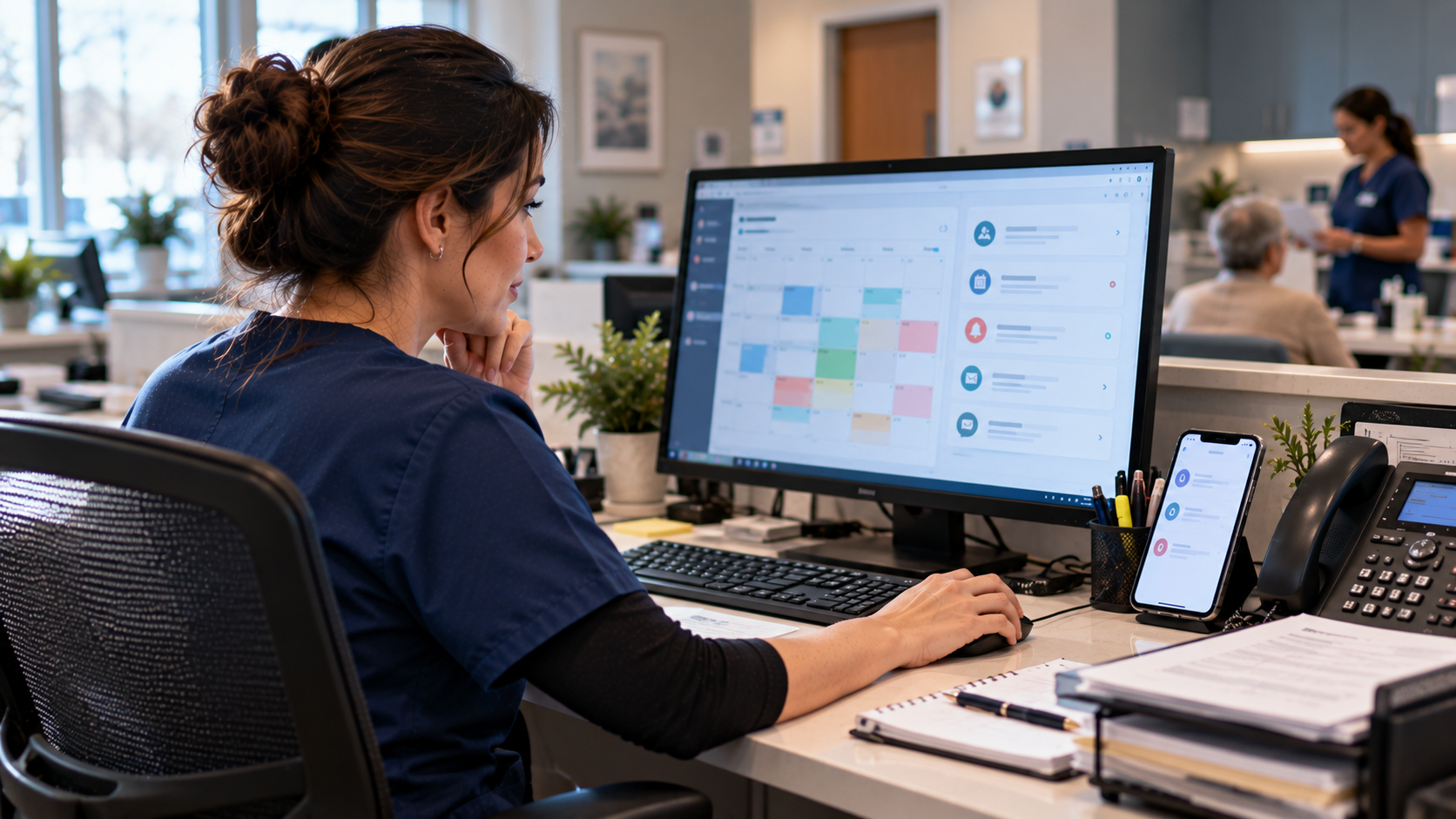
Here is how its key services fit into the bigger picture.
The value of these services comes from matching the right tools to the actual needs of a practice. A pharmacy may prioritize refill requests and call management, while a physical therapy clinic may focus on appointment scheduling and reminders. A medical spa may place greater emphasis on online booking, follow-up communication, and client engagement.
1. Make Routine Communication More Consistent
A patient engagement platform helps healthcare providers organize routine communication rather than depending on staff to remember every individual follow-up.
For example, automated appointment reminders can support a repeatable process for communicating upcoming visits. Two-way texting provides an additional channel for routine questions and responses, while email campaigns can help practices share relevant updates with their audiences.
These tools do not replace personal conversations when patients need individual attention. Instead, they can help teams manage routine interactions more consistently and reserve direct staff time for situations that require it.
2. Organize Incoming Calls With a Cloud Phone System
A healthcare cloud phone system with IVR can help structure the way incoming calls are handled. Appropriate call routing and voicemail workflows may make it easier for callers to reach the relevant team or leave a message when staff are unavailable.
This is especially relevant to independent pharmacies and busy clinics that receive questions about appointments, business hours, services, and other routine matters.
Practices should configure call options around their actual services and review voicemail processes regularly so important messages are not overlooked.
3. Give Patients Convenient Scheduling Options
Online appointment scheduling gives patients another way to arrange appointments. Depending on the practice's configuration, patients may be able to review available times and book without waiting for staff to answer the phone.
For the team, online scheduling can reduce some repetitive booking interactions and make appointment requests easier to organize. Automated reminders can then support communication ahead of scheduled visits.
Together, these tools can help create a more consistent process from booking through the appointment date.

4. Reduce Paper-Based Administrative Steps
Digital patient forms can support information collection before or during a visit, depending on how the practice uses them. This can reduce some printing, handling, and manual form-management steps.
Online payments provide another digital option for eligible transactions. When these services are incorporated thoughtfully into existing workflows, staff may spend less time managing avoidable administrative steps.
Healthcare providers should verify how information is stored, transmitted, and accessed, and confirm that their selected configuration meets applicable privacy and compliance requirements.

5. Keep Patients Informed Across Digital Channels
A practice's website, business listings, social media profiles, and patient communication channels should present clear and consistent information.
Website management and reviews and listing management can help providers maintain useful business details online. Email marketing and patient messaging can support appropriate updates, while accurate business hours and contact details can help patients know where to look for information.
This is particularly useful when services, opening hours, or appointment availability change. The objective is to make reliable information easier to find and reduce confusion before it turns into an avoidable phone call.
6. Support Patient Engagement Beyond a Single Visit
Patient experience extends beyond the appointment itself. Patients may need reminders, follow-up information, future appointments, prescription refill assistance, or a convenient way to contact the practice.
Finerr's combination of communication and engagement services can help providers plan these interactions across appropriate channels. For pharmacies, refill-request workflows may be especially relevant. For physical therapy clinics, reminders and scheduling can help patients stay organized around recurring visits. For medical spas and dental offices, online booking and consistent communication can support the broader service experience.
The right approach depends on the business, its patients, and the workflows it wants to improve.
7. Help Teams Focus on Work That Needs a Human Touch
Automation works best when it handles suitable, repeatable tasks—not when it tries to replace judgment, empathy, or professional care.
By organizing routine reminders, booking, messages, and administrative activities, healthcare providers can create more predictable workflows. Staff can then direct their attention toward patient questions, complex requests, and in-person interactions that benefit from personal assistance.
Results depend on implementation, staff adoption, integrations, and how consistently workflows are maintained. A useful starting point is to identify the tasks that interrupt the workday most often and improve those first.
Finerr has published case studies featuring independent pharmacies. These resources can help readers explore examples of how pharmacy businesses use Finerr in their operations.
Ocean Pharmacy Case Study TopValue Pharmacy Case Study Westside Pharmacy Case Study Zarchy Pharmacy Case Study Carteret Pharmacy Case StudyReview each case study for the specific business context, services, and outcomes described. Results from one pharmacy should not automatically be assumed to apply to every healthcare practice.
Healthcare businesses do not need to change every process at once. A practical approach is to start with the most frequent sources of interruption.
Identify recurring interruptions. Track common calls, repetitive questions, manual reminders, scheduling tasks, and paperwork bottlenecks.
Prioritize one or two workflows. Start with a process that consumes staff time or creates avoidable confusion.
Choose the appropriate tools. Consider online scheduling, automated appointment reminders, two-way texting, digital forms, or a cloud phone system according to the problem.
Keep information consistent. Review website details, business hours, contact information, and online listings.
Train the team. Make sure staff understand the workflow, know when to escalate a request, and can support patients who prefer phone or in-person assistance.
Measure what changes. Track relevant indicators such as missed calls, reminder completion, appointment booking patterns, response times, and staff feedback. Compare results with a baseline rather than assuming improvement.
Review and refine. Adjust messages, call routing, scheduling settings, and internal processes based on actual usage and patient feedback.
Great patient experiences are built through many small interactions: an answered question, a clear reminder, an easy booking process, accurate business information, or a convenient way to contact a healthcare team.
When those interactions depend on fragmented tools and repetitive manual work, staff can spend too much time managing processes and too little time helping people. A thoughtful patient engagement strategy can make routine communication more consistent and daily workflows easier to manage.

Finerr brings together services such as cloud phone systems, automated reminders, two-way texting, online scheduling, digital forms, online payments, email marketing, reviews and listing management, websites, and mobile app workflows to support independent healthcare providers.
The best starting point is to identify where interruptions happen most often and choose a practical improvement that fits the team's needs.
Discover smoother healthcare operations with Finerr—and create more room for the human side of care.
Explore Finerr at www.finerr.com or call (888) 526-8880.
Book a personalized demo and see how Finerr helps healthcare teams communicate more smoothly.


Great patient experiences begin behind the scenes with organized workflows and consistent communication. Healthcare teams often manage constant phone calls, manual appointment reminders, scheduling requests, paperwork, and disconnected systems that interrupt daily work. Finerr helps independent healthcare providers streamline these activities through a patient engagement platform offering cloud phone systems, automated reminders, two-way texting, online scheduling, digital forms, online payments, email marketing, and reviews and listing management. By improving routine communication and reducing repetitive administrative steps, healthcare businesses can create more convenient patient interactions. The right tools, clear processes, and regular performance reviews help teams build smoother operations while preserving personal care.
Get in Touch


A good patient experience includes clear communication, convenient scheduling, accurate information, and timely responses. Patients should understand what to expect before, during, and after an appointment. Consistency across phone, text, email, and online channels can help support that experience.
Patients experience the results of internal processes, including scheduling, reminders, call handling, paperwork, and follow-ups. When these workflows are organized, teams can respond more consistently. Better processes can create a smoother experience without sacrificing personal attention.
A patient engagement platform helps healthcare providers manage communication and interactions with patients across supported channels. Depending on the platform, this may include reminders, online scheduling, texting, digital forms, and other engagement tools. Finerr brings together services designed to support these workflows for independent healthcare providers.
Teams can begin by identifying recurring interruptions, such as routine calls, manual reminders, repeated scheduling questions, and paperwork. Appropriate automation and self-service options can reduce some repetitive tasks. Staff training and clear escalation procedures remain important for requests that need personal attention.
Healthcare workflow automation can make repetitive processes more consistent and reduce the need for certain manual steps. Examples include appointment reminders, digital information collection, and structured communication workflows. Its effectiveness depends on selecting suitable tasks and implementing the tools correctly.
Automated appointment reminders help practices communicate upcoming visits through configured channels, such as text or email. They can reduce dependence on staff sending every reminder manually. Practices should monitor delivery, patient responses, and appointment patterns to understand how well their reminder process works.
Online scheduling gives patients another way to book appointments without calling the office. This may reduce some routine booking inquiries and make appointment access more convenient. The actual impact depends on appointment availability, patient preferences, and how the scheduling system is configured.
A healthcare cloud phone system supports business phone communication through a cloud-based setup. Depending on its features, it may include call routing, interactive voice response (IVR), and voicemail options. It can help healthcare teams organize incoming calls and manage communication workflows.
Two-way texting gives patients and healthcare teams an additional channel for communication. It can be useful for routine questions, responses, and appointment-related interactions when appropriately configured. Practices should follow applicable privacy requirements and use suitable communication procedures for sensitive information.
Digital patient forms allow information to be collected electronically rather than relying entirely on paper documents. This may reduce printing, handling, and manual form-management steps. Practices should assess how forms connect to their existing workflows and verify that their chosen setup meets relevant privacy and security requirements.
Disconnected systems can require staff to switch between tools, repeat data entry, or manage separate communication processes. These extra steps may contribute to delays and administrative friction. Reviewing integrations and choosing a more coordinated workflow can help address these challenges.
Providers can review call patterns, improve IVR options, organize call routing, and establish a consistent process for returning voicemails. Two-way texting may provide an additional channel for suitable routine interactions. Staff should also have clear procedures for identifying and prioritizing important messages.
Providers should maintain accurate business hours, contact details, locations, and service information on their websites and relevant online listings. Reviews and listing management can support more consistent digital information. Regular checks are especially useful when operating hours or services change.
Online reviews and accurate business listings help people evaluate healthcare providers before contacting or visiting them. Responding professionally to feedback and keeping business information current can support trust and clarity. Practices should follow applicable privacy rules when responding publicly to reviews.
Healthcare email marketing can help providers share relevant updates, educational information, announcements, and appropriate follow-up communications. Messages should be useful, clear, and sent in accordance with applicable consent and privacy requirements. Segmentation and a sensible sending frequency can help keep communication relevant.
Depending on their needs and the platform's capabilities, pharmacies, clinics, dental offices, physical therapy practices, veterinary practices, and medical spas may benefit. Common use cases include reminders, scheduling, phone communication, messaging, and online visibility. Each business should select tools that match its workflows and patient expectations.
Finerr offers services such as a cloud phone system, automated appointment reminders, two-way texting, online scheduling, digital forms, online payments, email marketing, and reviews and listing management. These tools can help organize routine communication and administrative workflows. Results depend on the services selected and how they are implemented.
No. A patient engagement platform supports selected communication and administrative tasks; it does not replace the professional judgment, empathy, and care provided by healthcare staff. Automation is best used for appropriate repetitive activities while people remain available for complex questions and individual needs.
Practices can establish a baseline and monitor indicators relevant to their goals. These may include missed calls, appointment booking patterns, reminder completion, response times, administrative workload, and patient feedback. Reviewing these measures over time helps teams identify which workflow changes are useful.
Start by identifying the two or three tasks that cause the most interruptions or repetitive work. Choose a practical improvement, such as automated reminders, online scheduling, or a more organized phone workflow. Train staff, monitor results, and refine the process before expanding to other areas.
Discover how Finerr helps healthcare teams improve patient communication, organize scheduling, and reduce daily interruptions.