Jayesh Sarawagi | November 18, 2026
Healthcare professionals enter their workday with an important purpose: helping patients receive the care, information, and support they need. Yet the reality of running a pharmacy, clinic, dental office, physical therapy practice, veterinary clinic, or medical spa often involves much more than direct patient care.
The phone rings while a team member is assisting a patient. Another call comes in asking about an appointment. Someone needs to reschedule, a patient has a question about a prescription refill, and an administrative task remains unfinished. Before the team can complete one responsibility, another interruption demands attention.
What creates the most daily stress in healthcare? Often, it is not patient care itself—it is the constant stream of interruptions surrounding it.
These interruptions may appear small individually. However, repeated calls, manual follow-ups, scheduling changes, paperwork, and disconnected systems can make the entire day feel rushed. Staff members must repeatedly switch tasks, remember pending responsibilities, and respond to requests while trying to maintain a positive patient experience.
The solution is not simply to ask healthcare teams to work faster. It is to make routine operations easier to manage.
A well-designed patient engagement platform can help healthcare businesses organize communication, automate repetitive tasks, and give staff more control over their workflows. Finerr supports independent healthcare providers with digital tools designed to simplify daily operations, improve patient communication, and help teams spend less time managing avoidable administrative work.

1. Constant Phone Calls and Missed Communications
Phone calls remain an essential part of healthcare communication. Patients may call to ask about business hours, appointments, prescription refills, services, or other routine questions.
The difficulty arises when staff must answer every call manually, regardless of what they are doing. A receptionist may need to pause an intake process to answer the phone. A pharmacy employee may have to interrupt a workflow to respond to a routine inquiry. Multiple calls arriving together can create delays for both callers and people already receiving assistance.
When calls go unanswered, staff may also need to return them later. This creates another task, increases the chance of follow-up being delayed, and makes it harder to maintain a predictable workday.
A healthcare phone system with appropriate call routing, voicemail options, and automated communication workflows can help teams manage incoming requests more systematically.
2. Repetitive Appointment Reminders and Follow-Ups
Appointments require communication before and sometimes after a visit. Staff may spend time calling patients to confirm appointments, reminding them about upcoming visits, or following up when an appointment needs to be changed.
When these activities depend entirely on manual effort, they compete with other responsibilities. Repeatedly performing the same task also leaves less time for requests that genuinely require personal attention.
Automated appointment reminders and patient follow-up communication can help reduce the amount of repetitive work. They also give patients a more consistent way to receive important appointment information.
3. Manual Scheduling and Appointment Changes
Scheduling can become complicated when patients must call during business hours to book, change, or cancel appointments. Staff members may need to check availability, explain available times, update calendars, and communicate changes.
Every scheduling request creates an additional interaction. During busy periods, these requests can interrupt other work and make it difficult to keep the schedule organized.
An online scheduling system gives patients a convenient way to explore available appointments and book when appropriate. It can reduce dependence on phone-based scheduling and help staff concentrate on requests that need individual assistance.

4. Too Many Disconnected Software Tools
Healthcare businesses may use different tools for calls, scheduling, patient messages, reminders, reviews, forms, payments, and other administrative activities.
When these tools operate separately, staff may need to switch between multiple screens, repeat information, and remember where each task belongs. The problem is not necessarily the number of features available; it is the additional effort required to manage them.
A more connected approach to patient engagement can help bring routine communication and operational workflows into a more manageable environment.
5. Paperwork and Repetitive Administrative Tasks
Patient intake, document collection, payment follow-ups, and other administrative processes can consume significant staff time. Paper-based or highly manual workflows may require additional steps before information is collected, reviewed, or processed.
These tasks are important, but not every step needs to depend on staff manually initiating it.
Digital patient forms, online payment options, and suitable automated workflows can simplify parts of the administrative process. Staff can then direct their attention toward tasks that require judgment, clarification, or personal support.

6. Patient Expectations for Faster, More Convenient Communication
Patients increasingly expect businesses to provide clear information and convenient ways to interact. They may prefer a text message for a routine question, online booking instead of a phone call, or a reminder before an appointment.
When the only available communication method is a phone call, staff may receive more calls than necessary. When information on a website or business listing is incomplete, patients may call to confirm basic details.
Providing multiple suitable communication options can make it easier for patients to find information while reducing avoidable pressure on front-desk and administrative teams.
7. The Pressure of Managing Daily Operations With Limited Time
Independent healthcare providers must balance patient experience, team responsibilities, scheduling, communications, and business administration. Smaller teams may have fewer people available to handle unexpected requests.
Adding more tasks to an already busy schedule is rarely a sustainable solution. Instead, healthcare businesses should examine which activities can be simplified, standardized, or automated without compromising patient care or personal communication.
That is where operational efficiency becomes essential.
Read more: Growing Your Pharmacy? Why Better Systems Beat More Staff Read more: Data That Drives Growth: Why Every Pharmacy Needs Smart Insights Read more: How Pharmacies Improve Efficiency With Patient Engagement Platforms Read more: Why Visibility Matters in Pharmacy OperationsFinerr is a patient engagement platform built for independent healthcare providers. It helps businesses automate repetitive tasks, improve patient communication and engagement, and strengthen their online presence through a range of digital tools.
Rather than treating every interruption as an isolated problem, healthcare teams can review the everyday workflows that create unnecessary back-and-forth communication.
1. Manage Incoming Calls With a Cloud Phone System and IVR
Finerr's cloud phone system and IVR capabilities help healthcare businesses organize their phone communication. Appropriate call routing and voicemail options can give callers clearer paths to information and help staff manage incoming requests more systematically.
Separate voicemail options for patients and doctors, where configured, can also help organize messages by purpose.
How this helps: Staff can spend less time managing every incoming call manually, while callers have a clearer way to reach the appropriate destination or leave a message.
Read more: Why Healthcare Practices Need an IVR Cloud Phone System2. Automate Routine Appointment Reminders
Finerr offers automated patient reminder capabilities to help healthcare businesses communicate appointment information through supported channels, including SMS and email.
Instead of relying exclusively on staff to remember every reminder, practices can use automated workflows to support consistent communication.
How this helps: Teams can reduce repetitive reminder work and focus their attention on patient questions, schedule changes, and situations requiring personal follow-up.
Read more: Automated Patient Reminders: Reduce No-Shows and Improve Engagement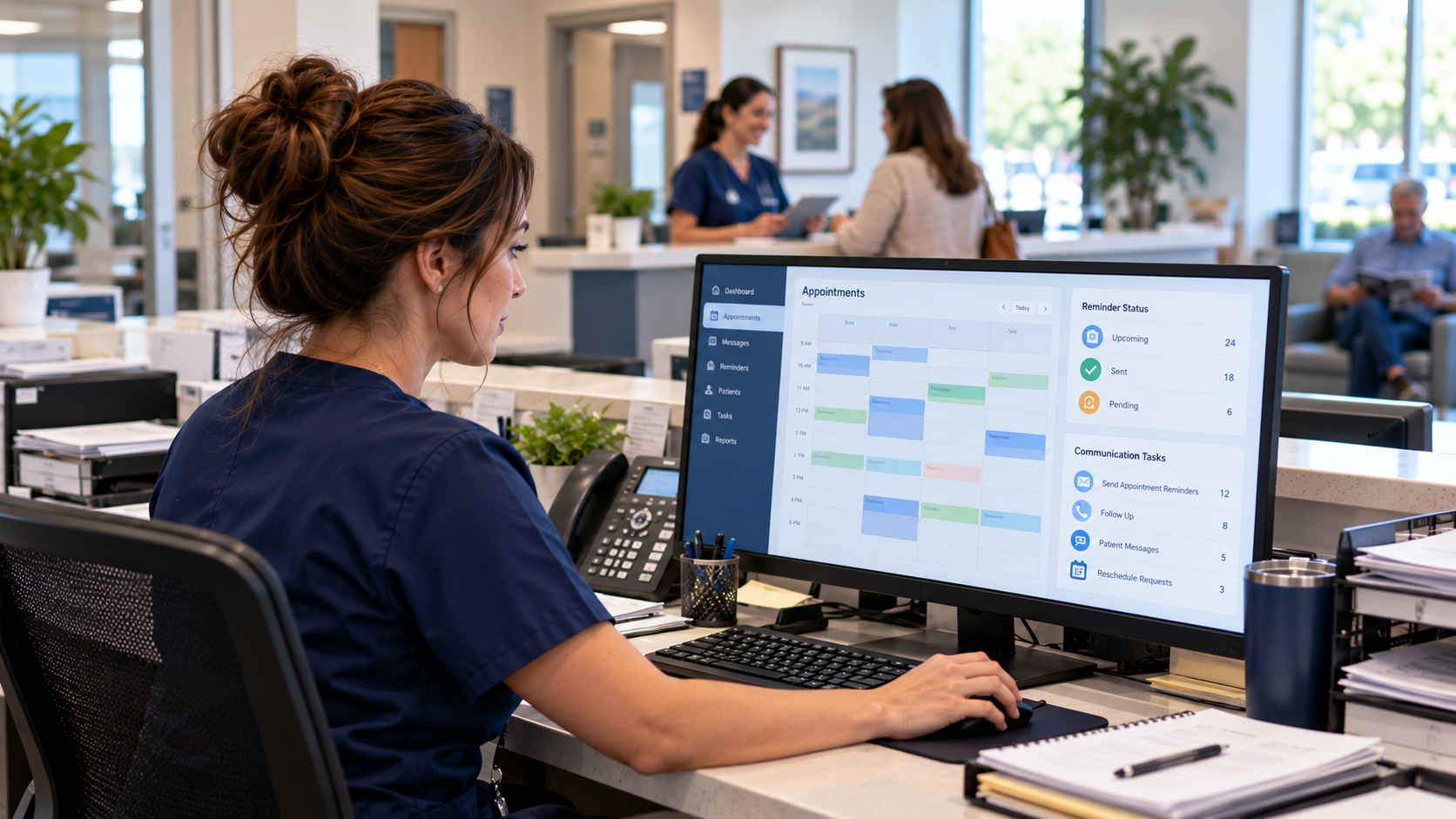
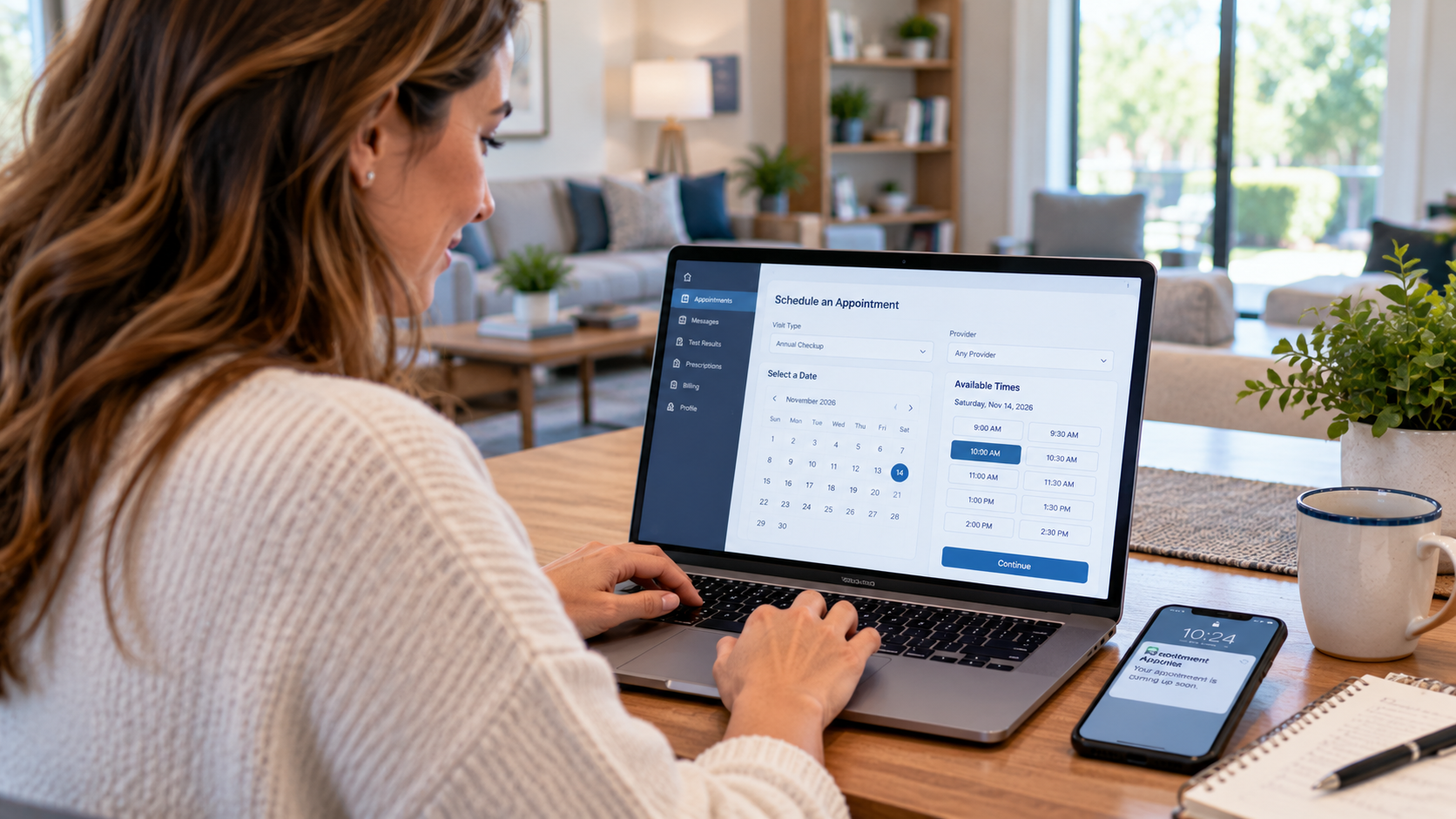
3. Make Scheduling More Convenient With Online Booking
An online scheduling system can provide patients with a convenient way to book appointments without always needing to call the front desk. This is especially useful when patients want to explore available appointment options outside normal phone hours.
How this helps: Online booking can reduce the number of routine scheduling calls and help staff concentrate on appointment requests that need additional coordination.
Read more: How Online Scheduling Improves Patient Loyalty4. Simplify Routine Communication With Two-Way Texting
Not every patient interaction requires a phone call. For suitable routine communication, two-way texting gives healthcare teams another channel for communicating with patients and receiving responses.
Finerr's patient texting capabilities support a more flexible approach to communication, allowing businesses to manage appropriate conversations through text rather than depending entirely on calls.
How this helps: Text messaging can reduce phone-based back-and-forth for suitable requests and give patients another convenient way to communicate.
Read more: Use Text Messaging to Reduce Missed Calls in HealthcareHealthcare organizations should establish appropriate messaging policies, protect patient information, and use channels that fit the sensitivity of the communication.
5. Reduce Paperwork With Digital Patient Forms
Digital patient forms can simplify the process of collecting information before or during an interaction. Depending on the workflow, patients may be able to complete forms electronically rather than relying entirely on paper-based processes.
How this helps: Digital forms can reduce some manual administrative steps, make information collection more convenient, and help staff organize intake-related tasks.
The exact workflow will depend on the forms being used and how the healthcare business configures its processes.
6. Make Payments More Convenient
Finerr offers an online payment system that supports digital payment workflows. Giving patients a convenient way to complete eligible payments can reduce the need for some in-person or phone-based payment interactions.
How this helps: Staff can spend less time coordinating certain routine payment steps and more time supporting patients and managing other responsibilities.
Healthcare businesses should confirm that their chosen payment workflow meets their operational, security, and compliance requirements.
7. Support Ongoing Engagement With Email Marketing
Email marketing can help healthcare businesses share relevant updates, educational information, service announcements, and other appropriate communications with their audiences.
How this helps: When these communications are planned and scheduled, teams can maintain consistency without manually contacting every recipient individually.
Email campaigns support structured communication and can reduce the need for repetitive one-to-one outreach for information suitable for broader distribution.
8. Offer Patients More Convenient Access Through a Mobile App
Finerr's mobile app capabilities can help make selected services easier for patients to access digitally. Depending on the available configuration, relevant workflows may include appointment access, communication, and prescription refill requests.
How this helps: Patients may be able to complete certain routine actions through a digital channel rather than needing to call the business for every request.
9. Simplify Review and Online Listing Management
Healthcare teams also need to maintain accurate business information and manage their online reputation. Doing this entirely manually across multiple platforms can create another recurring administrative burden.
How this helps: Finerr provides reviews and listing management capabilities to help businesses organize reputation-related workflows and maintain their online presence.
A more structured process can reduce some of the manual effort involved in managing reviews and business listings, while helping patients find relevant business information.
10. Support the Broader Digital Operations of a Healthcare Business
Finerr's wider service offering includes additional tools that can support daily operations and patient engagement:
Not every healthcare business will need every feature. The best approach is to identify the tasks that cause the most interruptions and prioritize the tools that address those specific needs.
Pharmacy teams often balance patient questions, prescription-related workflows, phone calls, and daily administrative responsibilities. Finerr's published pharmacy case studies provide examples that healthcare businesses can review when evaluating patient engagement and operational tools.
Explore the available case studies:
Ocean Pharmacy Case Study TopValue Pharmacy Case Study Westside Pharmacy Case Study Zarchy Pharmacy Case Study Carteret Pharmacy Case StudyReview each case study for its specific business context, implemented solutions, and reported outcomes. Results may vary depending on the organization's needs, workflows, and implementation.
Identify the biggest interruptions. Track the most common reasons staff members are interrupted, such as appointment questions, routine calls, reminders, or paperwork.
Separate routine tasks from complex requests. Determine which tasks can be handled through self-service information or automated workflows and which require personal attention.
Choose the right communication channel. Use calls, texts, email, online scheduling, and digital forms according to the task and the patient's needs.
Standardize repeatable processes. Establish clear procedures for incoming messages, appointment changes, follow-ups, and administrative responsibilities.
Measure what changes. Track indicators such as missed calls, time spent on manual reminders, appointment scheduling workload, and staff feedback before and after implementation.
Protect the personal side of care. Automation should support the team, not replace empathy, clinical judgment, or meaningful conversations.
The goal is not to eliminate every interruption. Healthcare work will always involve urgent questions, unexpected situations, and personal interactions. The goal is to reduce avoidable interruptions so staff can respond to important needs without constantly being pulled away from other responsibilities.

Daily stress in healthcare does not always come from the complexity of patient care. It can also come from the repeated interruptions surrounding it: phone calls, appointment changes, manual reminders, paperwork, and disconnected workflows.
Healthcare businesses can make meaningful progress by identifying these friction points and introducing practical ways to manage them. Automated reminders, online scheduling, two-way texting, digital forms, and a cloud phone system can help simplify routine communication when implemented appropriately.
Finerr brings together patient engagement and operational tools to help independent healthcare providers organize these workflows. The objective is straightforward: make everyday tasks easier to manage, create a more convenient patient experience, and give healthcare teams more room to focus on the people who need them.
Build calmer operations. Give your team more time for care.
Explore Finerr at www.finerr.com or call (888) 526-8880.
Book a personalized demo and see how Finerr helps reduce daily stress in healthcare operations.


Daily healthcare stress often comes from constant interruptions, including phone calls, appointment changes, manual reminders, paperwork, and disconnected software. These tasks can distract staff from patient care and make daily operations harder to manage. Finerr helps independent healthcare providers simplify routine workflows through a patient engagement platform offering a cloud phone system and IVR, automated appointment reminders, online scheduling, two-way texting, digital forms, online payments, email marketing, a mobile app, reviews and listing management, websites, social media management, digital fax, voicemail, and employee time management. By choosing tools that address their biggest workflow challenges, healthcare teams can build calmer operations.
Get in Touch


Daily stress can come from constant interruptions, including phone calls, appointment changes, repetitive follow-ups, and administrative tasks. These activities compete with patient-facing responsibilities and make it difficult for teams to maintain a consistent workflow.
Frequent interruptions force staff to switch between tasks, remember unfinished work, and respond to competing demands. Over time, this can make daily operations feel more rushed and increase the risk of delays or missed follow-ups.
Practices can begin by identifying their most frequent interruptions and separating routine tasks from requests requiring personal attention. Automated reminders, online scheduling, organized phone workflows, and digital forms can help simplify suitable activities.
Healthcare workflow automation uses digital tools to handle or simplify repeatable administrative processes. Examples include appointment reminders and structured communication workflows. Automation should support staff while preserving appropriate human involvement in patient care.
A patient engagement platform helps healthcare businesses manage communication and interactions with patients through digital tools. Depending on the platform, features may include reminders, messaging, scheduling, forms, and other patient-facing workflows.
A cloud phone system can help organize incoming calls through features such as call routing and voicemail. When configured appropriately, it can make it easier for callers to reach the right destination and help staff manage messages systematically.
Automated appointment reminders can reduce the need for staff to contact every patient manually. They support more consistent communication and allow staff to focus on scheduling changes, patient questions, and follow-ups that require personal attention.
Online scheduling gives patients a digital option for booking suitable appointments. This can reduce dependence on phone-based scheduling and allow staff to focus on more complex requests and other responsibilities.
Two-way texting provides an alternative to phone calls for appropriate routine communication. It can help healthcare teams exchange information with patients while reducing some unnecessary back-and-forth calls. Sensitive information should be handled through suitable, approved communication channels.
Digital patient forms can help patients submit information electronically, reducing reliance on paper-based processes. They may simplify parts of intake and information collection, depending on how the healthcare business configures its workflow.
Disconnected tools may require employees to switch between applications, repeat steps, and manage information in separate places. This can add friction to everyday workflows and make communication harder to coordinate.
Efficient workflows can help healthcare teams manage requests, communicate more consistently, and reduce avoidable delays. Operational efficiency should complement—not replace—personal attention, clinical judgment, and patient-centered care.
Independent pharmacies can review their phone workflows, prescription-related communication, scheduling, reminders, and administrative processes. Digital tools may help simplify repeatable tasks while allowing pharmacy staff to focus on patient needs and pharmacy responsibilities.
Finerr offers patient engagement and operational tools, including a cloud phone system and IVR, automated reminders, online scheduling, two-way texting, digital forms, and more. These tools can help healthcare businesses organize routine workflows according to their needs.
Finerr's services include patient engagement tools, cloud phone and IVR capabilities, scheduling, reminders, two-way texting, reviews and listing management, digital forms, online payments, email marketing, a mobile app, website services, social media management, digital fax, voicemail, and employee time management.
Automation is intended to simplify suitable repetitive tasks, not replace the empathy, judgment, and expertise healthcare professionals provide. Staff remain essential for patient support, complex requests, clinical decisions, and situations requiring human attention.
Practices can track indicators such as missed calls, time spent on manual reminders, appointment scheduling workload, message response times, and staff feedback. Comparing these measures before and after a change can help determine whether the new workflow is useful.
Email marketing can help healthcare businesses share appropriate announcements, educational information, and service updates with relevant audiences. It can reduce the need for repeated individual outreach when information is suitable for broader distribution.
Businesses should identify their biggest workflow problems before selecting tools. They should evaluate ease of use, integration requirements, privacy and security practices, available features, staff needs, and the expected operational benefit.
Start by documenting the interruptions that occur most frequently during a typical workday. Identify which tasks can be simplified, automated, or handled through alternative communication channels, then measure the impact of the changes over time.
Discover how Finerr helps healthcare teams simplify daily operations, improve patient engagement, and create calmer, more manageable workdays.