Jayesh Sarawagi | Feb 11, 2026 | 2 min read
Independent and community pharmacies are facing a growing communication challenge. Phone lines ring nonstop with refill requests, store hour questions, insurance follow-ups, and appointment inquiries. At the same time, pharmacy teams are expected to deliver accurate prescriptions, provide personal patient care, and stay compliant—often with limited staff and time.
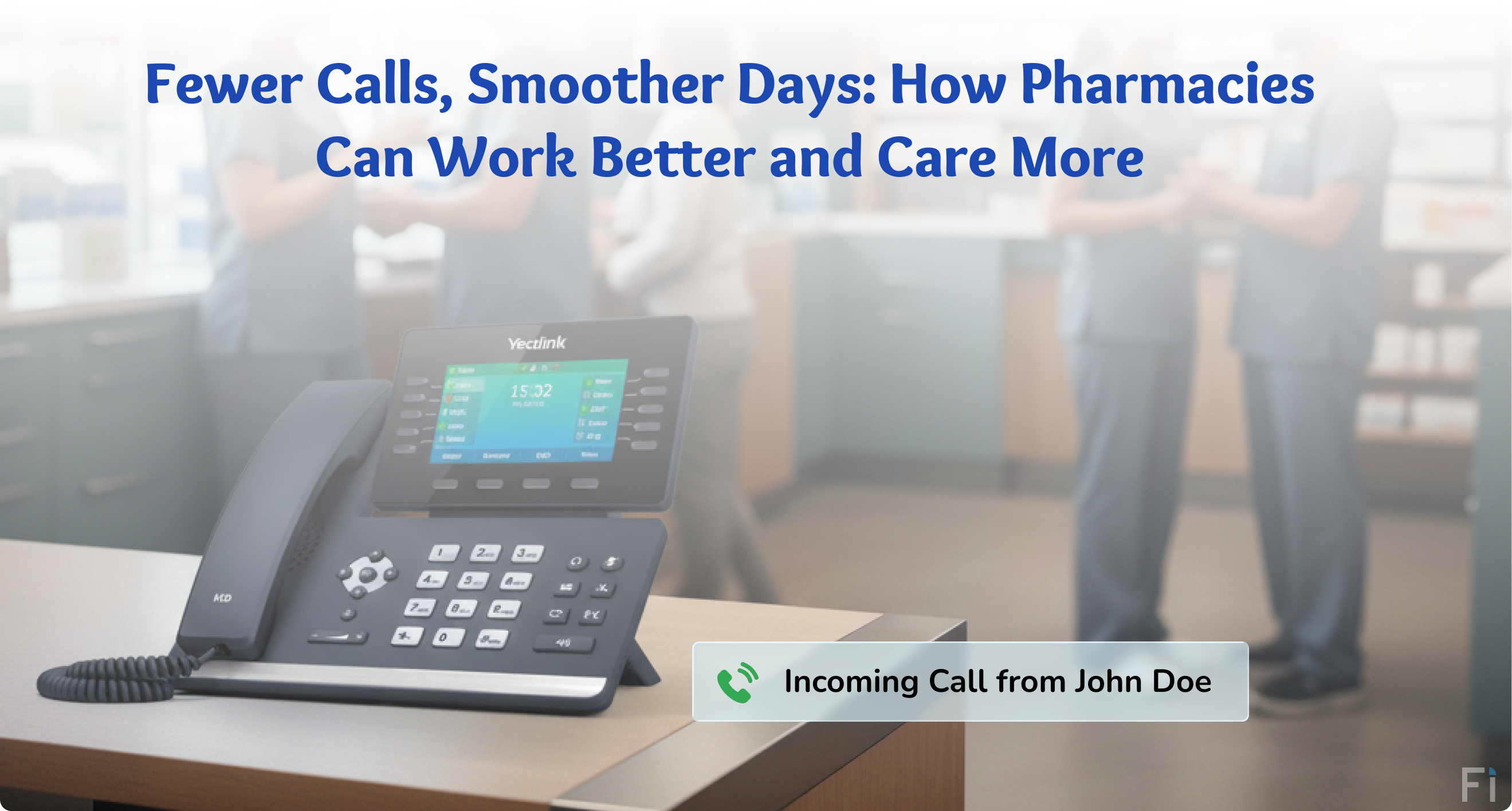
As call volumes increase, pharmacies need smarter ways to manage communication without sacrificing care quality. This is where pharmacy call automation with IVR & phone services/system becomes essential. These systems are not designed to replace human interaction but to support pharmacy teams by handling routine calls efficiently. In this blog, we explore how smarter call handling helps pharmacies work more smoothly, reduce staff stress, and improve the patient experience.
Pharmacy call automation with IVR & phone services/system uses automated phone technology to manage routine patient calls without requiring constant staff involvement. IVR (Interactive Voice Response) allows callers to navigate simple menus, get answers to common questions, and submit requests without waiting for a live team member.
With pharmacy call automation using IVR and phone systems, pharmacies can:
Instead of pharmacists being interrupted every few minutes, automated phone systems handle predictable inquiries consistently. Patients get quick responses, while staff stay focused on dispensing, counseling, and patient safety.
Read more: 5 Ways to Optimize Your Pharmacy IVRMost pharmacies receive hundreds of phone calls every week, and the majority are repetitive in nature:
Each call pulls staff away from critical tasks. Without pharmacy call automation with IVR & phone services/system, teams are forced to multitask constantly, increasing stress, slowing workflows, and raising the risk of errors. Over time, this constant interruption contributes to staff burnout and declining service quality.

Implementing pharmacy call automation with IVR & phone services/system creates immediate operational relief. Automated phone handling removes the most disruptive calls from the daily workflow and brings structure back to pharmacy operations.
Key operational benefits include:
By allowing IVR and phone systems to handle routine communication, pharmacy teams regain control of their day instead of constantly reacting to ringing phones.
One of the biggest contributors to pharmacy burnout is constant interruption. Pharmacy call automation with IVR & phone services/system helps protect staff time by filtering and managing calls intelligently.
With fewer disruptions, staff experience:
Automation doesn't remove human connection—it protects it. By reducing noise and chaos, IVR and phone systems allow pharmacy teams to engage more meaningfully with patients who need personal attention.
Read more: Missed Calls, Missed Patients: How Pharmacies Lose Without Smart Communication
When phones stop controlling the workflow, patient care improves naturally. Pharmacy call automation with IVR & phone services/system ensures patients receive timely, accurate information while pharmacists regain the ability to focus on in-person care.
Patients benefit from:
Patients feel informed and respected. Staff feel supported instead of overwhelmed.
Finerr's IVR and phone communication tools are designed specifically for pharmacy workflows. Instead of adding another disconnected system, Finerr helps pharmacies manage calls through a centralized, easy-to-use platform.
With Finerr, pharmacies can:
Finerr's pharmacy call automation with IVR & phone services/system helps create smoother days, better patient engagement, and less operational stress—without adding complexity.
Read more: Unanswered Patient Queries? Here's How AI Solves It 24/7Pharmacies don't need more staff—they need smarter communication systems. Pharmacy call automation with IVR & phone services/system reduces daily chaos, protects staff time, and creates space for better patient care. As workloads grow and patient expectations rise, adopting intelligent call handling is no longer optional—it's essential for smoother days and stronger pharmacy–patient relationships.


Independent pharmacies face increasing call volumes that disrupt workflows and contribute to staff burnout. Pharmacy call automation with IVR and phone systems helps manage routine inquiries, reduce interruptions, and restore operational efficiency. By streamlining communication, pharmacies can ease staff stress while delivering faster, more consistent patient experiences. Smarter call handling ultimately enables better care without adding staff or complexity.
Get in Touch





No. Pharmacy call automation with IVR is designed to support staff, not replace them. It handles routine and repetitive calls so pharmacists and technicians can focus on patient care, safety, and accuracy. This leads to better use of staff time and improved in-store service.
Yes. Small and independent pharmacies often benefit the most from IVR because limited staff must manage high call volumes. Automation helps smaller teams stay efficient without adding more employees. It creates structure without increasing workload.
Absolutely. IVR and phone systems are built to route complex, urgent, or clinical calls directly to pharmacy staff. Patients always have access to a live person when needed. Automation simply filters routine requests.
Modern IVR systems are designed to be simple and intuitive. Clear prompts and easy menu options make them accessible for patients of all ages. When implemented correctly, IVR improves clarity rather than causing confusion.
Yes. Automated phone systems ensure every caller is acknowledged, even during peak hours. Instead of unanswered calls or long hold times, patients receive immediate guidance. This reduces frustration and callback volume.
Yes. Refill requests are one of the most effective uses of pharmacy call automation. IVR systems collect refill information accurately and route it correctly. This reduces manual call handling and speeds up processing.
By reducing constant interruptions, pharmacy staff can focus more effectively on dispensing and verification tasks. Better focus leads to fewer communication and medication errors. Automation supports accuracy by protecting staff attention.
Reputable pharmacy call automation systems are built with healthcare compliance in mind. They follow strict data security and privacy standards to protect patient information. Compliance is a core requirement, not an add-on.
Yes. IVR and phone systems are especially valuable during high-demand periods like flu season. They manage call spikes without overwhelming staff. This helps pharmacies maintain service quality even during busy times.
Most IVR systems allow full customization to match pharmacy services and workflows. Menus can be adjusted for refills, store hours, vaccinations, or special announcements. Customization ensures a better patient experience.
Yes. Fewer interruptions and repetitive phone tasks significantly reduce daily stress. Pharmacy call automation helps create a calmer, more sustainable work environment. This directly supports staff well-being and retention.
Yes. Automated phone systems can answer common questions even when the pharmacy is closed. This reduces voicemail backlogs and improves patient satisfaction. Patients receive information without waiting for business hours.
When implemented correctly, automation improves service rather than making it impersonal. Patients get faster responses, and staff have more time for meaningful in-person interactions. The human connection actually improves.
Yes. IVR systems often integrate with automated reminders for refills, appointments, or pickups. Proactive communication reduces follow-up calls and confusion. This improves both efficiency and patient satisfaction.
Compared to hiring additional staff or managing burnout-related turnover, automation is often cost-effective. It reduces operational strain while improving service quality. Many pharmacies see strong ROI over time.
Yes. Many IVR systems provide insights into call volume, peak times, and common inquiries. These insights help pharmacies improve workflows and staffing decisions. Data visibility supports smarter operations.
Patients appreciate faster answers, shorter wait times, and clear information. Call automation reduces frustration caused by long holds or missed calls. Consistent communication builds trust.
No. IVR enhances customer service by ensuring staff are available for complex and meaningful interactions. It removes low-value tasks so customer service quality improves, not declines.
As patient expectations continue to rise, IVR and phone systems help pharmacies scale communication efficiently. Automation supports growth without increasing workload. It's a long-term solution for modern pharmacy operations.
Finerr's pharmacy call automation with IVR & phone systems helps reduce daily chaos, protect staff time, and create space for better patient care. See how it works for your pharmacy.